A retail floor does two jobs. It carries customers and trolleys all day, and it frames the product. The best retail tile is rarely the most dramatic one. It is the one that makes the merchandise look good and still looks new after years of footfall.
Let the product lead
A fashion boutique, an electronics store and a car showroom each want a different backdrop. Neutral, light floors let colourful products stand out and bounce light onto displays. Dark floors suit luxury goods and create a more intimate, premium mood but demand strong lighting.
Avoid busy patterns where merchandise is displayed on the floor. The tile should support the product, not compete with it.
Large format for a premium impression
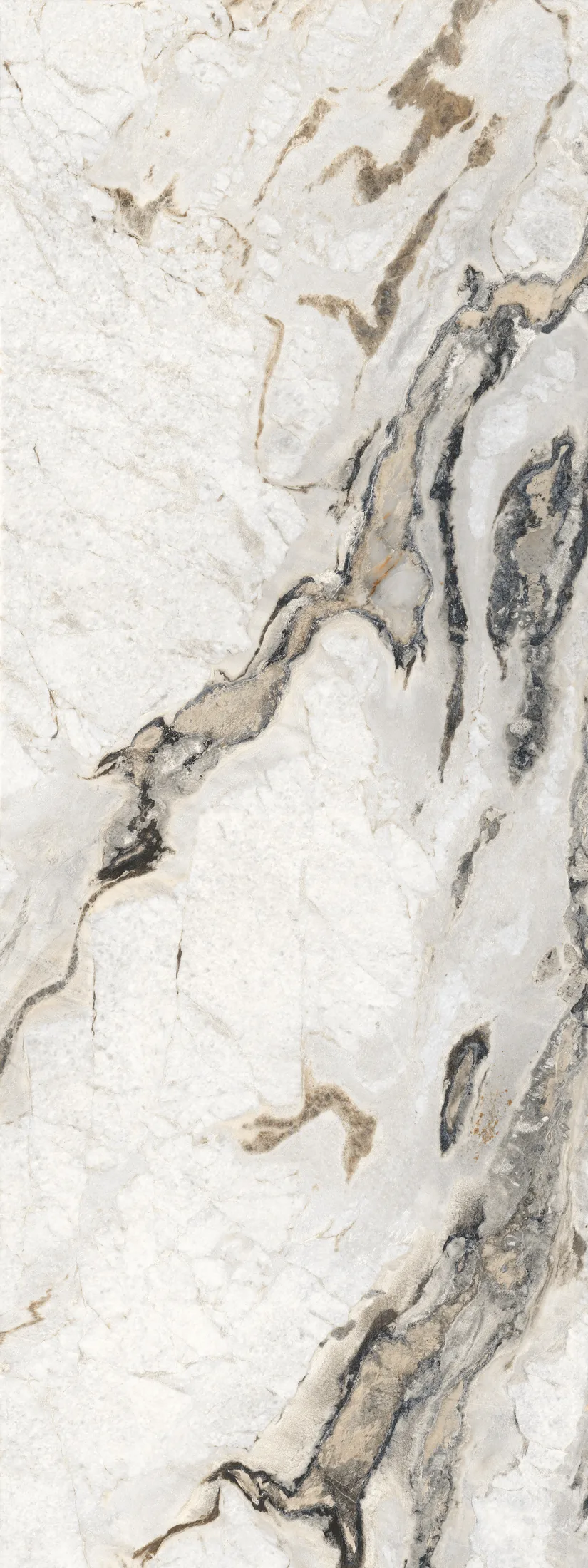
Showrooms and flagship stores benefit from large, rectified tiles. Fewer joints give a continuous, expensive-looking floor that photographs well. Sizes such as 80 × 80 cm, 100 × 100 cm, 120 × 120 cm and 60 × 120 cm are common. Lumina Tile's porcelain floor tiles reach up to 120 × 180 cm, and large slab tiles can create a seamless feature wall behind the till or brand wall.
Polished or matt?
This is the key trade-off in retail.
| Finish | Advantages | Cautions |
|---|---|---|
| Polished or glossy | Bright, reflective, upscale | Glare under spotlights, slippery in wet weather, shows scuffs |
| Lapato | Some sheen with more texture | Needs a cleaning plan |
| Matt | Soft, hides marks, safer | Less reflective, can look flatter |
| Textured at entrance | Handles rain and wet shoes | Blend into main floor |
Many stores use polished tile in the main body and a matt or Carving finish in the entrance zone. A customer who slips at the door will not remember the beautiful marble effect.
Durability and structure
Retail floors take trolleys, pallet trucks and display fixtures. For general sales areas, 9 to 12 mm porcelain on a flat base is typical. Stockrooms and loading routes deserve full body porcelain, which is more forgiving of scuffs and impact.
Ask your contractor to plan movement joints in large open floors. Rigid, unbroken tile across a vast area will crack where the structure moves, usually at doorways and column lines.
Lighting, colour and brand
- Light floors increase brightness and reduce lighting load, which many operators value.
- Check the tile under the store's real lighting, since LED colour temperature changes how a grey or beige reads.
- Match grout to the tile to maintain a seamless look.
- Use a contrast tile or band to guide customers along a path or define zones such as checkout.
Walls and displays
Feature walls in textured porcelain, concrete effect or stone effect give brands a signature backdrop. Large formats cut the number of joints and create a bold, modern frame. In fitting rooms and washrooms, ceramic wall tiles keep the space cleanable.
Planning for refits
Retail design changes every few years, and stores are often refitted in sections. Choose a design that can be sourced again, and keep a reserve of the original batch for patching. When you extend a floor later, matching shade and calibre matter more than matching the name of the design.
For a chain with many outlets, standardising on two or three sizes and finishes makes ordering, installation and repair simpler. Check the figures on the technical details page and use the tiles calculator for each outlet's area before consolidating orders.
Cleaning and maintenance in retail
Retail floors are cleaned daily, often by machine, and sometimes in the early hours with little supervision. Choose a finish that tolerates the chosen method, and agree a cleaning regime with the facilities team. A glossy floor may need a different pad and cleaner from a matt one. Place entrance mats to catch grit, since grit is the main cause of dulling on polished floors.
For multi-store chains, record the exact tile code, size, surface and batch used in each outlet. When a store is extended or repaired years later, the maintenance team can reorder with confidence and match the original look.
Common questions
Is polished porcelain too slippery for shops?
For dry interiors with a cleaning protocol, it is acceptable. Use a safer finish at entrances, near food counters and anywhere water can arrive.
What thickness is right for a showroom?
Most showrooms use 9 to 12 mm porcelain. Heavy displays, vehicles or trolleys may justify thicker or full body material.
Can I mix tile sizes in one store?
Yes. Using one size in the main hall and another in storage or back-of-house is common, and mixed sizes can be shipped together.
To plan a store or showroom tile package, send your areas and finish preferences to Lumina Tile via the contact page.