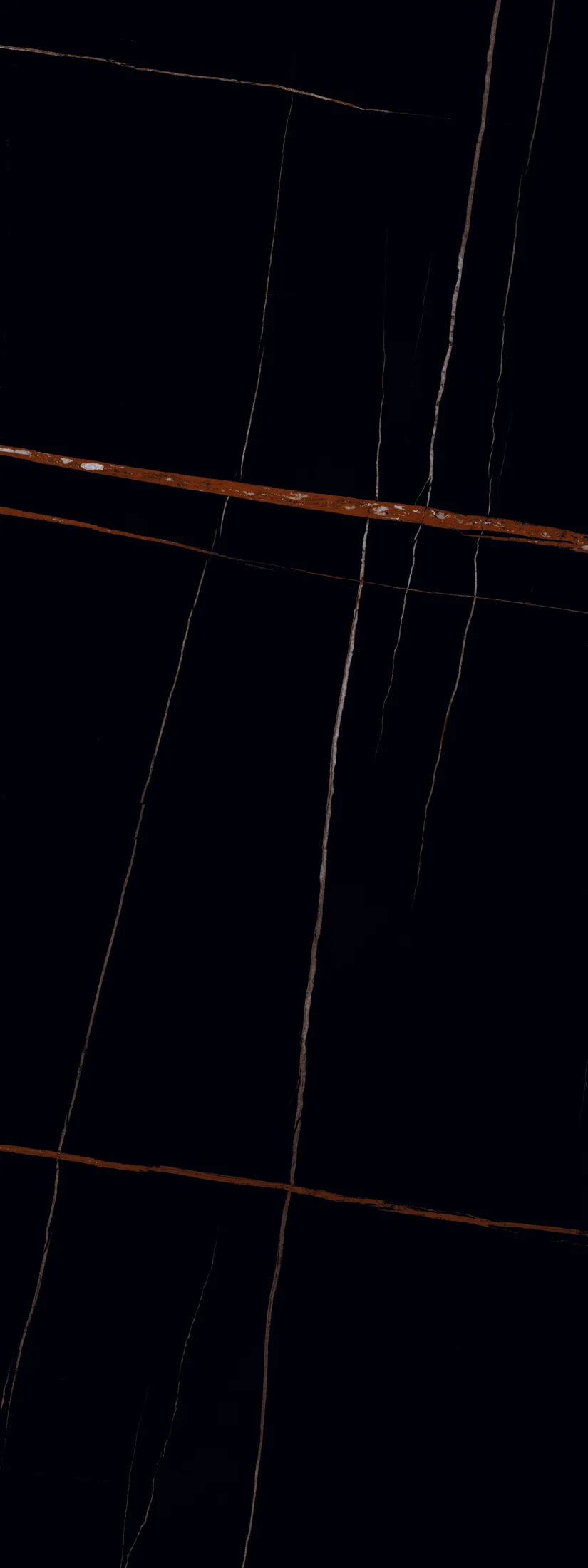
A 15 mm tile is a thick tile by any standard. Most floor tiles in the world sit between 8 and 12 mm. Going to 15 mm adds body, weight and load tolerance, and it also adds cost in freight and handling. The question is whether your project actually needs it.
At Lumina Tile, 15 mm is part of the Large Slab Tiles category, which is offered in 6, 9, 12, 15 and 20 mm. It is a deliberate step between the standard 12 mm slab and the 20 mm paver-grade thickness.
What the extra thickness actually does
Thickness is not the same as strength, but in a dense porcelain body it contributes to three things buyers care about.
- Load tolerance. A thicker tile spreads point loads more evenly. This matters under heavy trolleys, pallet jacks, vehicles at low speed or concentrated furniture loads.
- Impact resistance. A dropped tool or a dragged object is less likely to chip a thick edge or crack the face.
- Handling stiffness. A large 15 mm slab flexes far less than a 6 mm one when it is lifted on edge. That reduces breakage during installation.
It does not remove the need for a properly prepared base. A thick tile on a poor substrate will still fail at the joints or crack with the slab beneath it.
Where 15 mm makes sense
Choose it when the surface will be worked hard, not simply because it is the biggest number on the list.
- Retail floors and showrooms with constant trolley traffic.
- Warehouse mezzanines, workshop reception areas and light industrial walkways.
- Large public lobbies where a single slab format is used across a wide area.
- Countertops, vanity tops and table tops cut from slab, where the edge is visible and a thicker profile looks substantial.
- Exterior terraces on a stable, well-drained build-up, where a heavier tile resists lifting and shifting.
For ordinary residential living rooms and bedrooms, 9 or 12 mm is normally enough. Paying for extra weight in freight there rarely returns anything.
15 mm compared with its neighbours
| Thickness | Typical role | Main trade-off |
|---|---|---|
| 6 mm | Wall cladding, overlay on existing surfaces | Needs careful handling and full support |
| 9 mm | Walls and light floor use | Not for heavy loads |
| 12 mm | Standard heavy residential and commercial floor | Heavier than thin options |
| 15 mm | High-traffic floors, worktops, terraces | Weight, cutting effort, freight |
| 20 mm | Outdoor paving, vehicle areas, raised floors | Heaviest, needs suited tools |
What to check before you order
Start with weight. A 15 mm porcelain tile is heavy per square metre, and a stack of large slabs is heavier still. Confirm that your site has the lifting kit, the vehicle access and the floor loading to receive them. Container weight limits can also cap how many square metres fit in one box, which affects planning. Check the packaging details for the pack configuration of the size you want.
Next, confirm surface and finish. Slabs in this category are offered in Glossy, Matt and Carving surfaces, and the 160 × 320 cm slab is also available in Satin. For a floor that will see foot traffic, a matt surface is the safer choice. Polished surfaces show scratches and scuffs more clearly under heavy use.
Then plan the cutting. A thick tile needs a wet saw with a suitable blade or a bridge saw. Handheld grinders can chip the face. Ask your installer if they have worked with this thickness before.
Installation notes
- Use a flat, stable, cured substrate. Check flatness with a long straightedge before laying.
- Use a polymer-modified adhesive suited to large and heavy tiles, and back-butter the tile so there are no voids under it.
- Use a levelling system on large slabs to avoid lippage between neighbours.
- Leave movement joints at perimeters and at regular intervals across large areas.
Voids under a heavy tile are where cracks start. Tap the surface after fixing to listen for hollow spots.
Specifying it clearly
When you write the enquiry, state the thickness as a requirement and not a preference. Give the size, the surface, the expected load and whether the tile will be bonded, pedestal-supported or used as a fabricated top. A supplier can only source accurately against a clear brief, and a vague request for heavy-duty tile can return a very different product from the one you imagined.
Also say whether edges will be visible. On worktops and stair nosings, a 15 mm edge is exposed, and the buyer should decide in advance whether it will be mitred, capped or left square.
Common questions
Is 15 mm stronger than 12 mm?
Generally yes, in terms of load spread and impact tolerance, provided the body quality is the same. The base preparation matters just as much.
Can 15 mm slabs be used outdoors?
They can on a well-built, drained base. For paving where vehicles or heavy furniture are expected, the dedicated outdoor porcelain range in 16 and 20 mm is a closer fit.
Which sizes come in 15 mm?
The thickness is offered within the large slab range. Sizes and thickness combinations are confirmed per order, so state your target size at enquiry.
If you are specifying a heavy-duty floor or worktop, send Lumina Tile the size, thickness and destination through the quote form and we will confirm what can be sourced and packed.