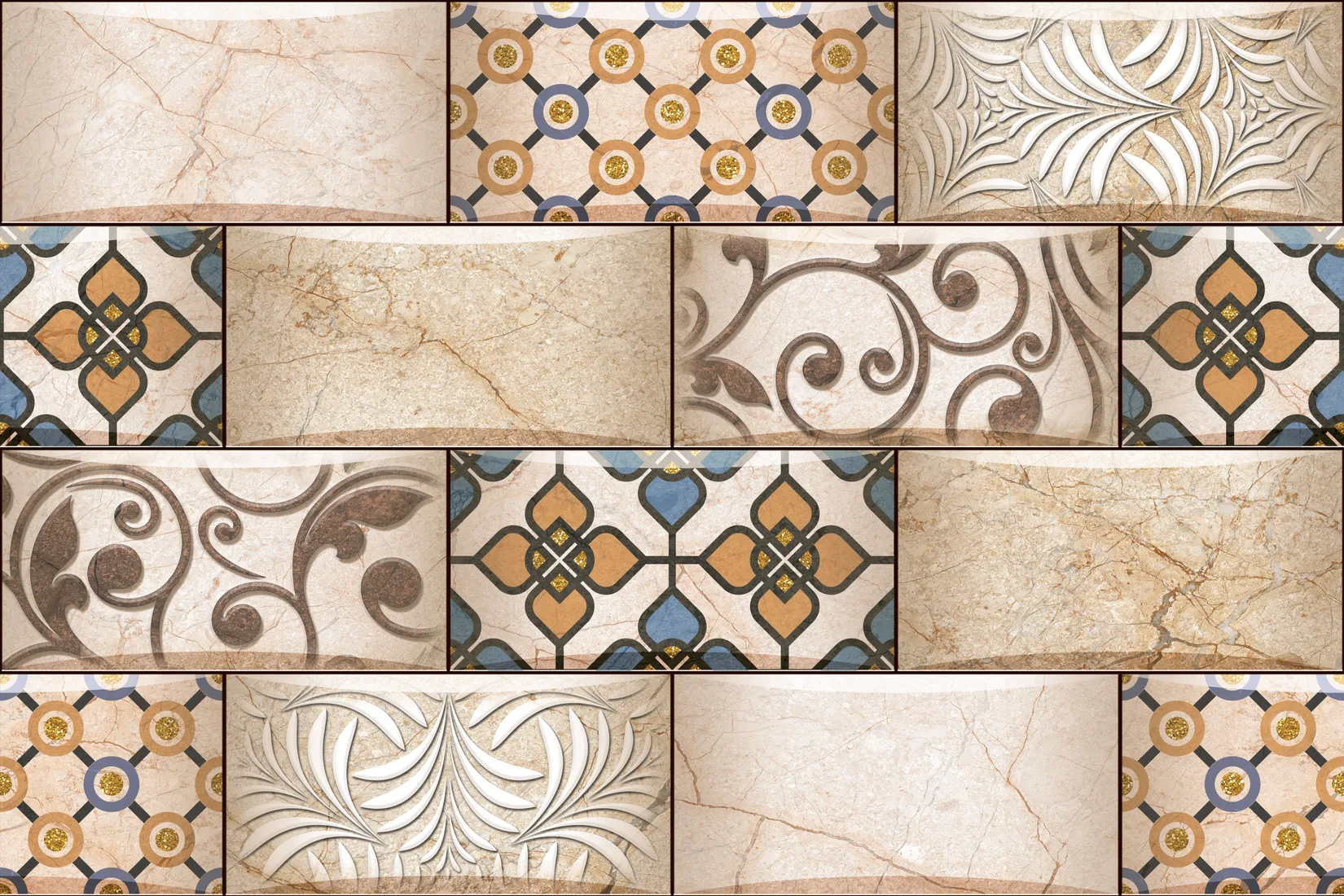
The word subway describes a look more than a size. The classic is a small rectangle in a 1:2 ratio, laid in a half-offset brick pattern, but the family has grown to include slim strips, squares and long planks. Choosing the right size and pattern changes a wall from nostalgic to contemporary without changing the material.
The sizes offered
Lumina Tile supplies subway tiles in 6 to 9 mm thickness. Sizes fall into three groups.
| Group | Sizes (cm) | Character |
|---|---|---|
| Squares | 8 × 8, 10 × 10, 10.8 × 10.8, 15 × 15, 20 × 20 | Grid, retro, or offset for a softer look |
| Classic rectangles | 7.6 × 15.2, 7.5 × 20, 10 × 20 | Traditional subway proportion |
| Long and slim | 5 × 25, 7.5 × 30, 10 × 30, 10 × 40, 21.5 × 25 | Contemporary, strong lines |
Most sizes come in Glossy and Matt. The exception is 21.5 × 25 cm, which is offered in Matt and Carving. Glossy reflects light and suits small bathrooms. Matt is softer and hides water marks.
Layout patterns
Running bond (brick)
Each row is offset by half a tile. This is the classic pattern and the most forgiving, because the offset hides small alignment differences. A one-third offset works too, and suits longer tiles such as 10 × 40 cm.
Stack bond
Joints align in both directions, giving a clean grid. With rectangles, laid vertically, it emphasises height. It needs accurate sizing and a straight wall, because every misalignment shows.
Vertical running bond
The same brick offset, turned on its side. It draws the eye up and works well in low bathrooms and tall shower walls.
Herringbone
Tiles meet at right angles in a zigzag. It works best with longer rectangles such as 7.5 × 30 or 10 × 40 cm, and needs careful cutting at edges, so allow more waste.
Basketweave and mixed
Two or three tiles side by side, then rotated. It suits square-ish proportions and decorative floors in small spaces.
Joint width and colour
Grout does more of the visual work with small tiles than with large ones. Matching the grout to the tile makes the surface quieter. Contrasting grout, such as dark with white tiles, makes the pattern the feature. Joints of 2 to 3 mm suit most subway tiles. Wider joints suit a handmade look but collect dirt more readily.
Check whether the tile is rectified. Pressed ceramic edges are often slightly rounded, which gives a soft bevelled look that rewards a slightly wider joint.
Where each size fits
- Kitchen splashbacks: 7.5 × 20, 10 × 20 or 7.6 × 15.2 cm for the traditional look; 5 × 25 cm strips for a modern one.
- Shower walls: larger tiles mean fewer joints, so 10 × 30 or 10 × 40 cm are easier to keep clean.
- Feature walls and bars: 21.5 × 25 cm in Carving brings texture.
- Small squares: 8 × 8 and 10 × 10 cm suit borders, niches and compact spaces.
Planning and quantity
Small tiles mean more joints and more cutting time, but they follow curves and corners well. Measure wall areas, subtract openings, and add about 10 per cent for cuts, more for herringbone. The tiles calculator gives a first figure. Check the packaging details for pieces per carton, since small tiles are packed in large numbers.
Mix tiles from several cartons when laying, and finish corners with a trim or a flexible sealant, not grout alone.
Mixing sizes and colours
Subway tiles invite combinations. A common approach is to run a 7.5 × 20 cm tile on the main wall and a 5 × 25 cm strip as a band or a niche lining, in the same colour but a different surface, say Glossy and Matt. This adds interest without introducing a second colour. Another approach is to pair squares of 10 × 10 cm with rectangles of 10 × 20 cm, since the shared dimension keeps the joints aligned.
When mixing, keep the joint colour the same across sizes. Changing both size and joint colour in one wall quickly feels busy.
Check that the thickness of each size is compatible. Tiles range from 6 to 9 mm, and a thick tile next to a thin one will create an edge unless the adhesive bed is adjusted. Ask about the exact thickness of each design before you plan a mixed scheme.
Common questions
Are subway tiles only for walls?
They are mostly wall tiles. If a floor is intended, confirm the specific tile is rated for it.
Which size is the most classic?
7.6 × 15.2 cm follows the traditional 3 × 6 inch proportion, and 10 × 20 cm is the metric favourite.
Where can I see the range?
Browse the subway tile range to see designs and colours.
If you plan to stock several subway sizes, ask Lumina Tile for a mixed-size quote through the contact page.