Slate, limestone and travertine are three of the most copied natural stones. Each has a distinct character, and each translates differently into porcelain. Knowing the differences helps you brief a supplier and avoid choosing a design that fights the room.
The three effects
Slate effect
Slate is layered, dark and naturally textured, with a cleft face that looks split rather than cut. Typical colours are charcoal, rust, multicolour and green grey. Slate look tiles work best with a rustic, carved or R rated surface. They are common on terraces, in entrances, in country kitchens and on feature walls, and they look best with an uneven, shaded pattern.
Limestone effect
Limestone is calm and fine grained, usually cream, grey or sand, with faint fossil marks or soft clouds. It is the most flexible of the three. It suits living rooms, hotel corridors, spa areas and open plan kitchens. Matt, sugar and carving surfaces make it look honed and natural.
Travertine effect
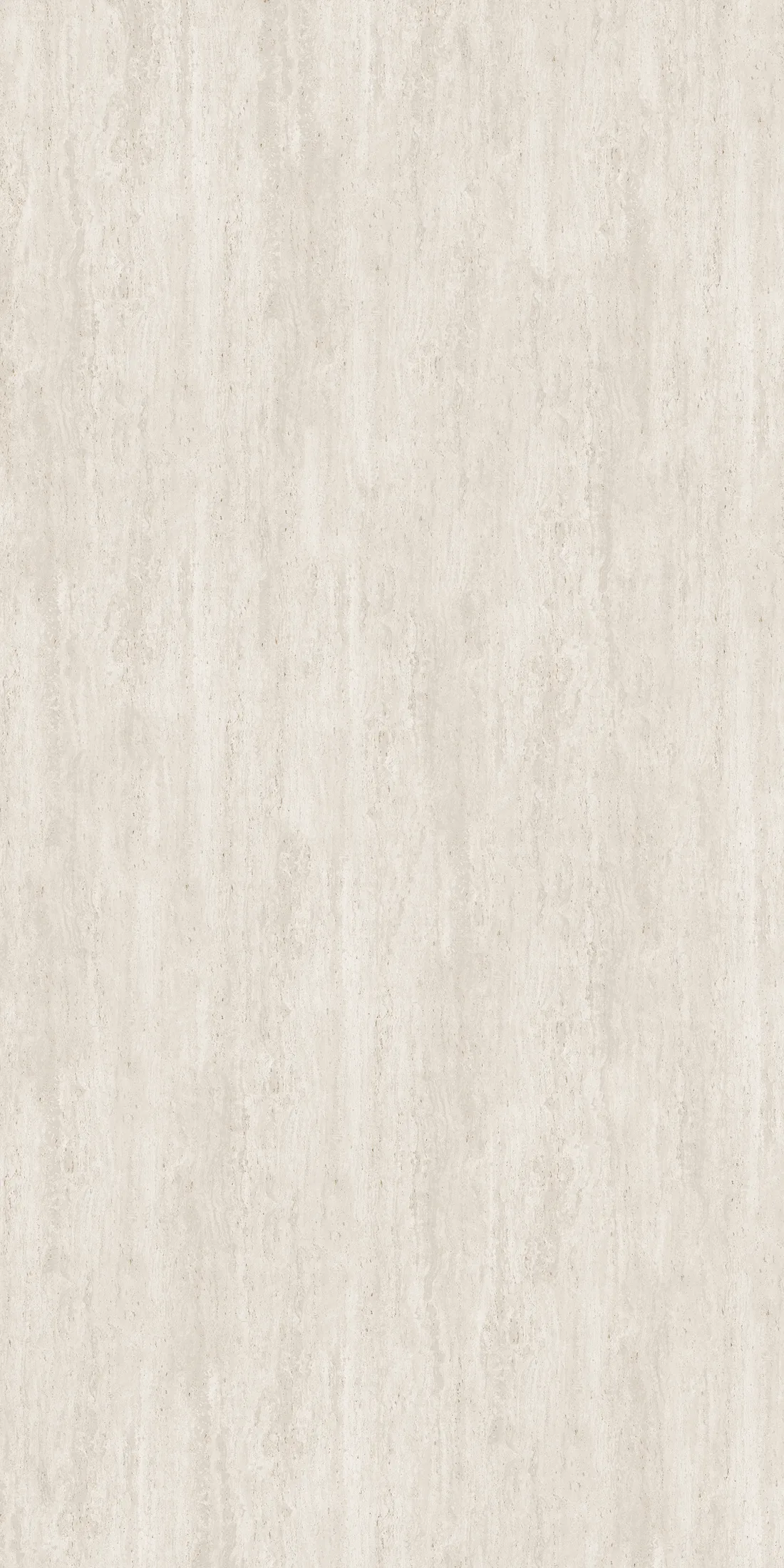
Travertine is recognised by horizontal banding and small pits where gas bubbles formed. Colours run from ivory to walnut. It carries a Mediterranean, warm character. Travertine look porcelain often reproduces the pits as surface texture, with the holes already filled, so you get the look without the grout maintenance that real travertine needs.
Side by side
| Feature | Slate | Limestone | Travertine |
|---|---|---|---|
| Typical colours | Charcoal, rust, green grey | Cream, grey, sand | Ivory, gold, walnut |
| Pattern | Layered, cloudy | Fine, quiet | Banded, pitted |
| Mood | Rugged | Calm, refined | Warm, Mediterranean |
| Preferred surface | Rustic, carving, R-10, R-11 | Matt, sugar, carving | Matt, carving, lapato |
| Typical use | Terraces, entrances, walls | Living and wellness areas | Villas, hotels, patios |
Why porcelain beats the real thing in many projects
- No sealing: natural limestone and travertine need sealers and resealing. Porcelain with absorption at or below 0.5 percent does not.
- No etching: acidic spills damage calcium based stones but not porcelain.
- Consistent calibre: sizes and thicknesses are uniform, which speeds up laying.
- Frost and weather resistance in the right product, which is vital outdoors.
- Repeat supply: a design can be reordered, unlike a quarry face that is exhausted.
Choosing sizes
Stone is often laid in mixed sizes or large slabs. Porcelain supports both. For an authentic look, use 60 × 120 cm (600 × 1200 mm) or 80 × 80 cm floors, or the long 30 × 120 cm planks for terraces. Outdoors, the outdoor porcelain tiles come in 16 and 20 mm thickness with R-10 and R-11 surfaces, in 60 × 60 cm, 60 × 90 cm, 60 × 120 cm and 30 × 120 cm. Indoors, the porcelain floor tiles and slab ranges offer the same stone effects. Lumina Tile curates stone look designs across all these families, and the catalogue lists sizes by family.
Grout and layout
- Pick grout slightly darker than the stone to look natural.
- Keep joints narrow for limestone and wider for slate to emphasise irregularity.
- Randomise carton faces to avoid repeating the same pattern.
- Consider a running bond or herringbone for plank formats of travertine.
- Use a drainage fall outdoors, and flexible adhesive for exterior work.
Choosing between the three
If you want one stone look in a range, limestone is the broadest seller, because it fits modern and classic schemes alike. Add a slate design for exteriors and rugged interiors, and a travertine design for warm, Mediterranean style projects. That trio covers most requests without duplication. Remember that colour variation is a feature of stone effect tiles, so show customers a full carton laid out, not a single tile.
Finishing touches
Stone effect surfaces look best with matching details. Use skirting cut from the same tile, a bullnose or trim at exposed edges, and thresholds in a similar tone. For outdoor steps, choose a tile with a nosing or cut edge in the same R rated surface so treads look unified and grip stays consistent.
Lighting changes stone effect strongly. Raking light from a window or wall washer brings out slate texture, while diffuse light calms limestone. If possible, review a laid carton under the lighting the final room will have.
Common questions
Can stone look tiles be used in showers?
Yes. Choose sugar or a rated surface on the base and a gentler texture on the walls.
Which stone look is easiest to match with furniture?
Limestone, because its quiet pattern and neutral colours work with nearly every style.
Do stone look tiles need sealing?
Porcelain generally does not. Check the manufacturer guidance for any specific polished or lapato surfaces, and see the technical details page.
Send your preferred stone effect, size and surface through the contact page and Lumina Tile will suggest suitable designs.