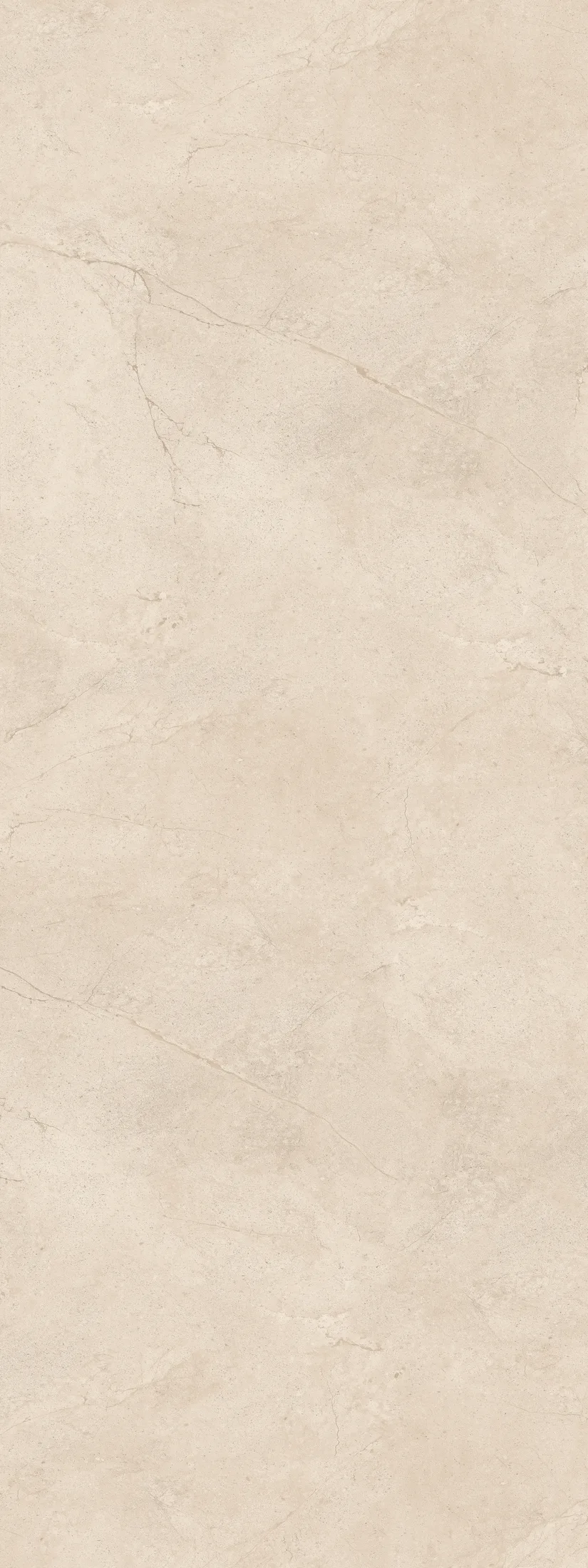
Large porcelain slabs have changed what a wall can look like. A single sheet of marble-effect or stone-effect porcelain can run floor to ceiling with almost no joints. They also change how the wall is built, because slabs behave differently from small tiles.
What counts as a slab
Slab tiles are very large-format porcelain panels. Lumina Tile's large slab tiles run from 80 × 240 cm to 160 × 320 cm, in 6, 9, 12, 15 and 20 mm thickness, with Glossy, Matt and Carving surfaces. The 160 × 320 cm size also comes in Satin.
The thickness you choose depends on where the slab goes. Thinner slabs suit interior wall cladding, where weight and cutting matter. Thicker slabs suit countertops, floors and more demanding uses.
Interior wall cladding
Feature walls, reception backdrops, shower surrounds and lift lobbies are natural homes for slabs. Few joints mean a clean look and easy cleaning. In bathrooms, a slab shower wall removes the grout lines that collect mould.
The wall must be flat and sound. A slab spans a large area, so any bow or hollow in the substrate shows up as lippage or stress. Prepare the wall properly, and use the adhesive system recommended for large formats, applied to both the wall and the slab back to ensure full coverage.
Façade cladding
On external walls, slabs are used in two ways.
- Adhered systems: the slab is bonded to a prepared substrate. Suited to lower, protected walls and podiums, and requires frost-resistant, flexible adhesive.
- Ventilated façade systems: slabs are mechanically fixed to a frame, with an air gap behind. This is the usual solution for taller buildings, because it manages moisture, thermal movement and weight.
Fixing method, anchor type, frame design and wind load calculations are engineering decisions. Involve the façade engineer from the start, and use fixings approved for ceramic panels. This is not a job to improvise on site.
Choosing thickness and surface
| Use | Typical thickness | Surface notes |
|---|---|---|
| Interior wall feature | 6 to 9 mm | Any finish, polished suits dry interiors |
| Wet area wall | 6 to 12 mm | Waterproofing behind, matt is easier to maintain |
| Exterior adhered cladding | 9 to 12 mm | Matt or Carving, frost-resistant adhesive |
| Ventilated façade | 12 to 20 mm | Confirm thickness against fixing system |
Treat this as a starting point. The right thickness depends on the fixing system and the project's engineering, so check with your supplier and your façade consultant.
Joints and movement
Large panels still move with heat. Leave open or sealed movement joints, usually wider than on small tiles, and fill them with a flexible sealant. Do not butt slabs hard against each other, and never against structure.
Handling, cutting and logistics
- Slabs are heavy and fragile on edge. They travel upright in A-frames or crates, and need trained handlers and vacuum lifters on site.
- Cutting needs specialist equipment, with a bridge saw or CNC tools for openings. Plan cut-outs for sockets, windows and pipes before ordering.
- Check the packaging details page for how slabs are packed, and plan site access, as a 320 cm panel will not fit through a standard stairwell.
Ordering checklist
- Confirm the surface layout, with the slab size matched to the wall height to minimise cuts.
- Specify the thickness for the fixing system.
- Order the full quantity from one batch, including an allowance for cutting breakage.
- Request technical values from the technical details page and from your supplier for the engineer's file.
Design the wall around the slab
Start the layout from the slab size, not the wall. If a wall is 2.4 m high, a 120 × 240 cm slab can run full height without a horizontal joint. Align vertical joints with doors, windows and corners, and use trims for exposed edges. Good planning reduces cuts, waste and the number of fragile pieces on site, and gives a cleaner finished look.
Common questions
Can slabs be used outside in frost?
Porcelain slabs have very low water absorption and suit exterior cladding, provided the fixing system and joints are designed for the climate.
Are slabs better than small tiles on walls?
For appearance and cleaning, often yes. For budget, handling and ease of installation, small tiles are simpler. It depends on the project.
Can slabs be cut on site?
Straight cuts and openings are possible with proper equipment and trained installers, but poor cutting is the commonest cause of breakage.
Lumina Tile supplies slab sizes from Morbi's factories for walls, façades and surfaces. Share your wall dimensions and fixing system with the team on the contact page to discuss thickness and layout.