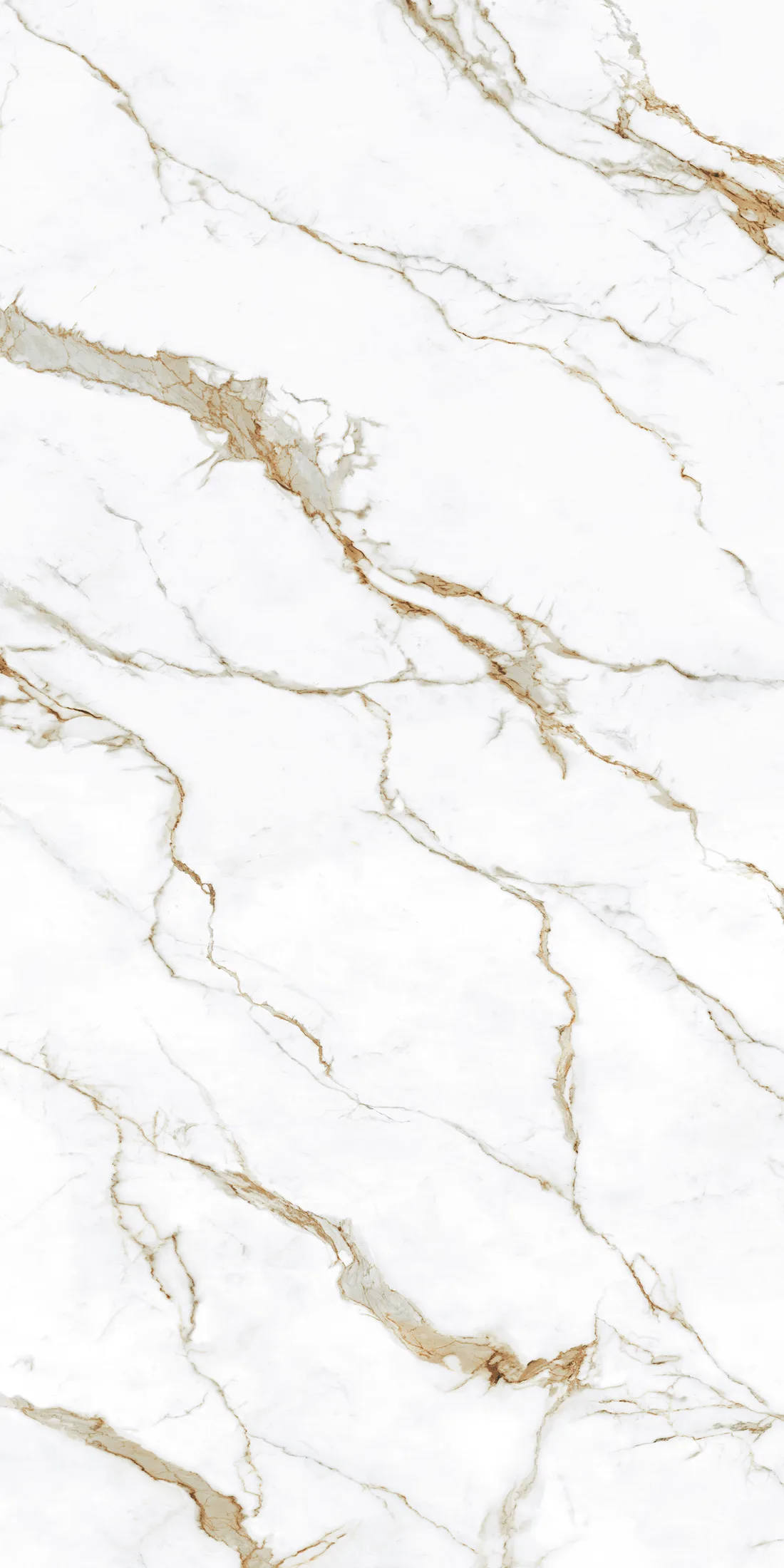
Satin is the middle child of tile surfaces. It has a gentle, silky sheen that reflects some light but not enough to create mirror images. Where gloss shouts and matt whispers, satin speaks at a normal volume, which is why it suits so many modern interiors.
What satin looks like in a room
A satin tile shows colour more deeply than matt but avoids the harsh reflections of a polished tile. Window light rolls across the surface instead of flaring. In large formats, that gives a calm, even look, particularly with stone, concrete and plain colour designs.
Fingerprints, footprints and water spots show less than on a glossy surface, so a satin floor looks clean for longer between mops. It also hides small surface irregularities better than gloss, which is a practical advantage on large floors.
Where satin works best
- Large open living spaces: reduces glare while keeping a refined look.
- Kitchen counters and wall cladding in slab format: easy to wipe, softer than a polished slab.
- Bathroom walls and vanity surrounds: adds light without mirror effect.
- Hotel lobbies, offices and retail: elegant under artificial lighting.
- Bedrooms and hallways: soft sheen gives a warm feel.
Satin in the Lumina Tile range
Satin is offered in the largest format available in the large slab range: 160 × 320 cm (1600 × 3200 mm). Along with satin, that size is produced in glossy, matt and carving surfaces. This makes it a choice for projects that want the ultimate seamless look, such as whole wall features, kitchen islands and reception counters, with a finish that is easier to live with than a polished slab.
Slab thickness options in the range are 6, 9, 12, 15 and 20 mm. Thinner slabs suit wall cladding and furniture, and thicker ones suit floors and worktops. Confirm the thickness available for satin at quote stage, and check the catalogue for the current list.
Satin compared with matt and glossy
| Feature | Matt | Satin | Glossy |
|---|---|---|---|
| Reflection | Very low | Soft | High |
| Colour depth | Subtle | Rich | Richest |
| Marks and fingerprints | Hidden | Mostly hidden | Visible |
| Wet slip tendency | Lower | Moderate | Higher |
| Hides uneven substrate | Best | Good | Poor |
Handling and installing large satin slabs
A tile this size is a different job from a standard floor tile. Plan the work before the delivery arrives.
- Check access. Doors, lifts and stairwells must take a slab on edge.
- Use proper lifting frames and vacuum lifters, and a team trained in large formats.
- Prepare the substrate flat. Large slabs show undulations. Level and cure before laying.
- Use the right adhesive, with full bed coverage and a notched trowel suited to slab sizes.
- Cut with the correct equipment, typically a bridge saw or a specialist cutting service.
The packaging details page explains how slabs are crated for export, and the export process page describes how containers are loaded and documented.
Cleaning satin
Use a neutral cleaner and a microfibre mop. Avoid wax, abrasive creams and acid products, because they can leave a patchy sheen on satin more noticeably than on matt. Wipe up oil quickly in kitchens.
Specifying satin for projects
Because satin is offered in the largest slab size, it is most often chosen for architectural elements rather than ordinary floors. Typical uses include full height wall panels, kitchen island cladding, reception desk fronts, lift lobbies and vanity backdrops. In each case, give the fabricator exact drawings, including cut outs for sinks, sockets and switches. Large slabs are expensive to waste, so confirm dimensions on site before cutting and allow for a spare slab where the programme allows.
Transport and storage of slabs
Large slabs travel in protective crates and should be stored upright on a flat base with soft padding between faces. Never lean slabs against a wall at a steep angle for long periods, because uneven support can cause stress. Plan a covered, dry storage area near the site, and have the lifting equipment booked before delivery. These steps matter more for slabs than for any standard tile, and a short conversation with your supplier about crating and unloading avoids damage that cannot be repaired.
Edges deserve attention too. A satin slab has crisp, visible edges, so use edge protection during handling, and decide early whether exposed edges on counters and panels will be mitred, polished or covered by trims.
Common questions
Is satin the same as semi polished?
Not exactly. Semi polished surfaces are partly polished and partly matt, which is what the lapato finish offers. Satin has a uniform soft sheen across the whole face.
Can satin tiles be used on floors?
Yes, for indoor floors in dry areas. For wet rooms or exposed entrances, choose a matt, sugar or R rated surface.
Does satin finish suit marble look designs?
Very well. It keeps the depth of veining and avoids the glare of full polish.
If you are planning a slab project, tell the team your sizes and quantities through the contact page.