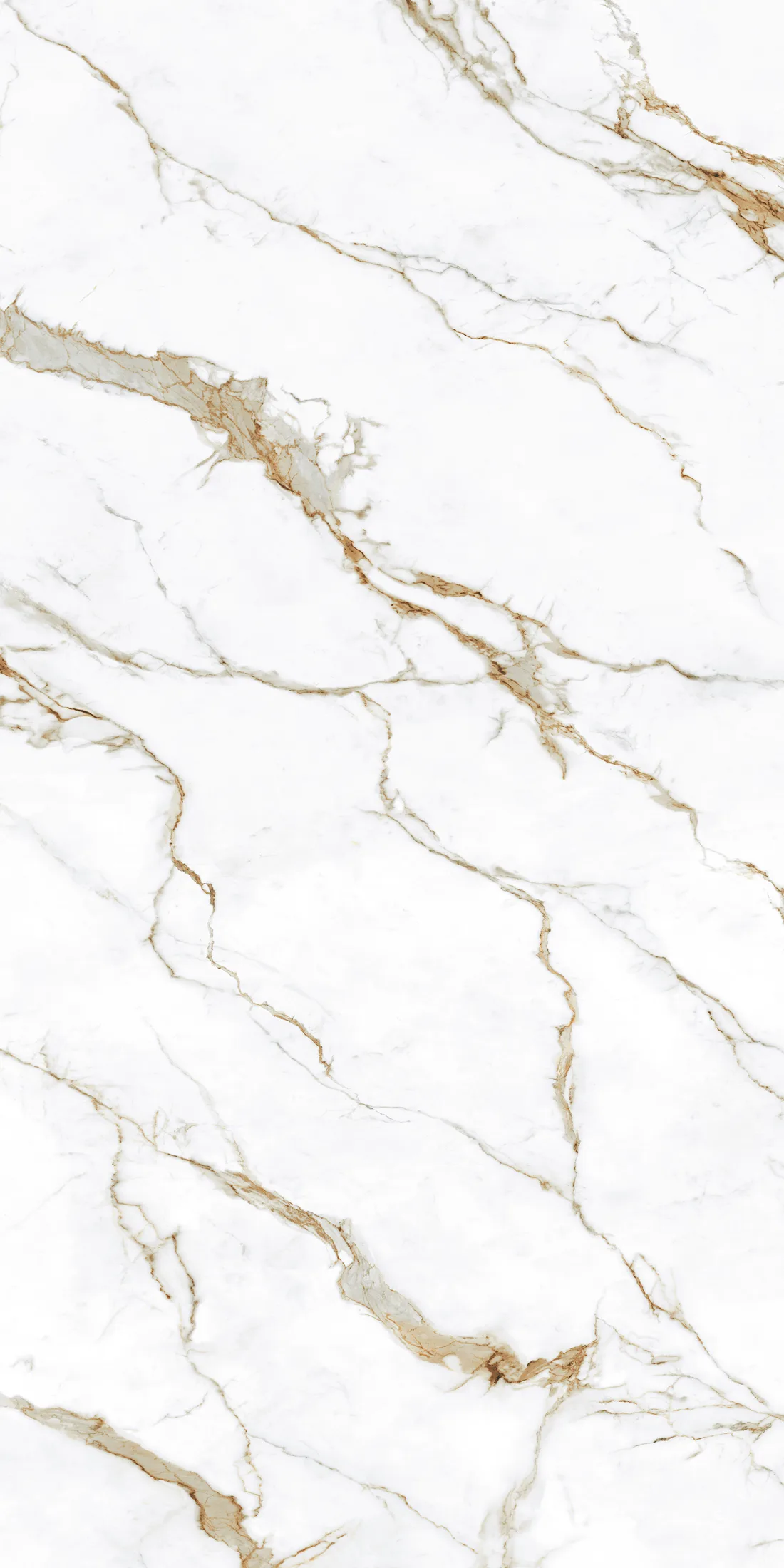
A large slab is not just a bigger tile. It changes how the surface looks, how the material is shipped, who can install it and what can go wrong on site. A standard tile is more forgiving and more flexible. A slab is more dramatic and more demanding. The right choice comes from counting the real costs, not just the price per square metre.
Definitions
Standard tiles are the everyday formats: 30 × 30, 60 × 60, 60 × 120 cm and similar. Large slabs begin where a tile stops being handled by one installer, for example 120 × 240 cm (1200 × 2400 mm) and above. Slabs are thinner for their size, often 6 to 12 mm, though thicker versions exist for floors and external use.
Side-by-side
| Factor | Large slab | Standard tile |
|---|---|---|
| Joints | Very few, continuous look | More joints, pattern interrupted |
| Installation | Specialist crew, vacuum lifters, frames | Standard tilers |
| Substrate flatness | Very strict | Moderate tolerance |
| Handling and transport on site | Needs A-frames, planning of routes and lifts | Simple |
| Breakage risk | Higher in transit and handling | Lower |
| Cutting | Specialist tools or factory cutting | Standard wet saw |
| Wastage | Lower on large surfaces, higher on small rooms | Predictable |
| Uses | Walls, facades, countertops, large floors, furniture | Almost anything |
What slabs do better
The big gain is visual. A 120 × 240 cm slab can cover a wall with a single piece, so a marble pattern reads as one stone. Fewer joints also mean less grout to clean, which is a real benefit in kitchens, showers and commercial spaces. Slabs also open up uses outside normal tiling: countertops, vanity tops, table tops, cladding and even furniture.
Lumina Tile's large slab tiles start at 80 × 240 cm and go up to 160 × 320 cm, in 6, 9, 12, 15 and 20 mm thicknesses, with Glossy, Matt and Carving surfaces. Check the catalogues for the formats by size.
Where the cost really sits
The slab price per square metre is only a part of the total. Add:
- Freight: slabs are shipped on A-frames or bundles with special packing, so containers hold fewer pieces than with boxed tiles. See packaging details for how each size is packed.
- Handling equipment: vacuum lifters, trolleys and a team of at least two installers.
- Substrate preparation: a floor or wall that is flat to a tight tolerance.
- Specialist labour: experienced slab fixers cost more than general tilers.
- Breakage allowance: a broken slab loses far more value than a broken tile.
For a large, simple wall, the total can still come out lower than small tiles, because labour hours are fewer. For a small room full of cuts and corners, standard tiles are usually cheaper and safer.
Planning the logistics
Measure the route to the install location before ordering. Doors, stairs, lifts and corridors that suit a box of tiles may not suit a 3.2 metre slab on an A-frame. Decide where it will be stored, and keep it upright and supported. Confirm that the structure can carry the weight, especially on upper floors.
Lumina Tile can confirm packing for slabs at the quotation stage.
Design decisions that change the cost
Slabs reward early planning. Decide where the joints go before the order, so that each slab lines up with doors, windows and fixtures. A slab that has to be cut down to a small piece wastes most of its value. If a wall is 2.4 metres high, a 120 × 240 cm slab spans it in one piece with no horizontal joint at all.
Standard tiles reward flexibility. Offcuts from one area can often be reused in another, and a damaged tile is quick to replace. For multi-room homes, staged projects or places where access is tight, that flexibility often outweighs the look of a seamless surface.
Insurance deserves a thought as well. A shipment of slabs carries more value per piece, so confirm that cover reflects the replacement cost of each slab, and inspect packing on arrival before the carrier leaves.
Common questions
Do slabs crack more easily?
They are strong when fully supported, but vulnerable to edge impact and flexing during handling. Correct carrying and full-bed adhesive matter.
Can slabs be cut on site?
Yes, with proper tools, but many projects order slabs cut to size to reduce risk.
Are slabs only for walls?
No. Thicker slabs are used on floors, and thinner ones on walls, counters and cladding.
If you are comparing slabs and standard tiles for a project, send the surface sizes through our contact page and we will help model the options.