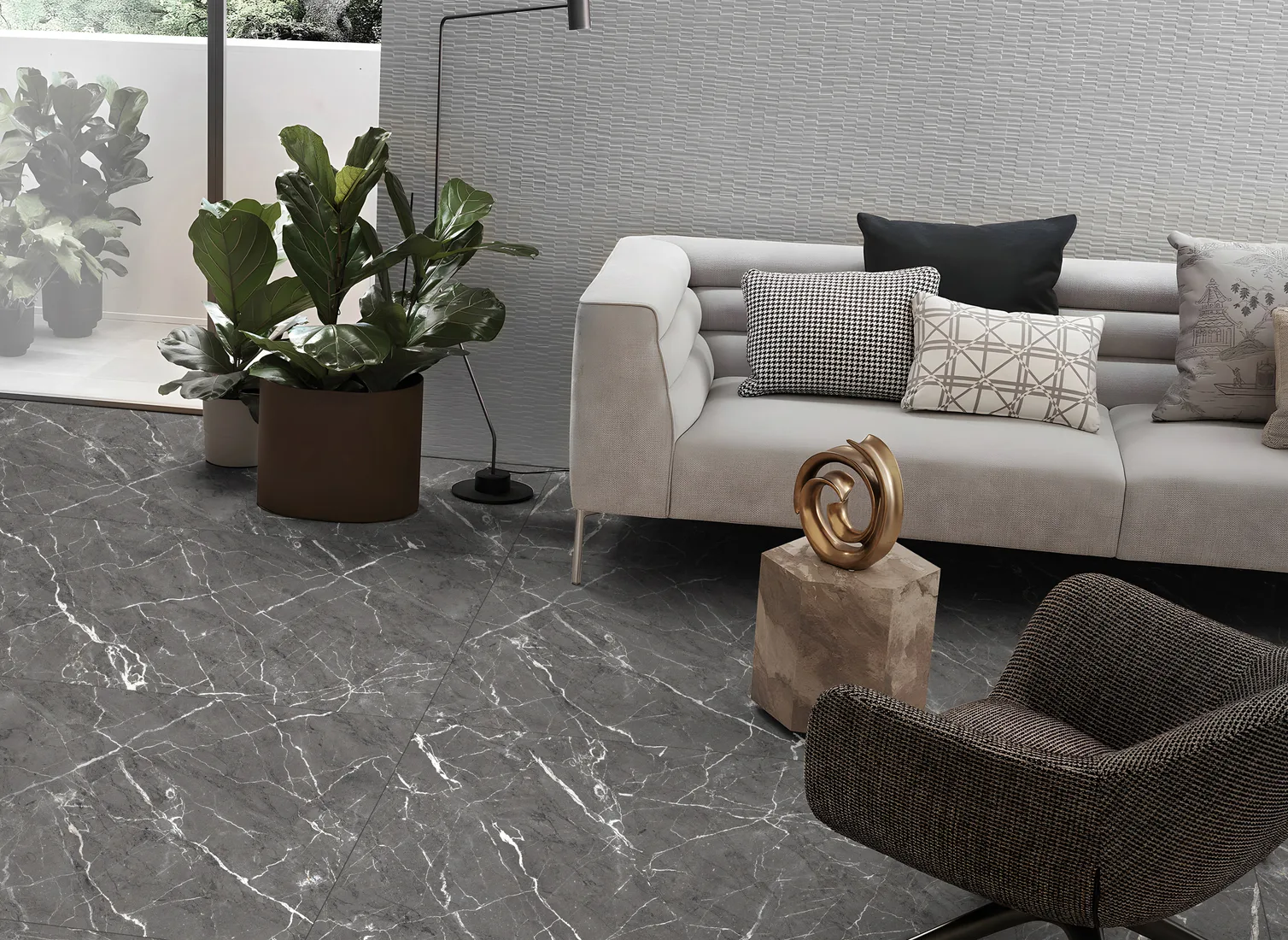
A tile catalogue is built to make tiles look good, so it is easy to flip through and still miss what you need to know. The useful information is in the small print: sizes, surfaces, thickness, packing and technical notes. This guide shows where to look and what to ask when a page leaves something out.
Start with the structure
Most export catalogues are organised by size or by category. A size-based layout, where each page group shows one format, lets you compare designs within the size you plan to stock. A category-based layout, such as wall, floor or outdoor, helps you separate products by use.
Lumina Tile's catalogues are arranged by size, which matches how importers usually build orders. Whichever layout you use, first decide your sizes and only then look at designs.
Read the size line properly
Sizes are normally written in centimetres or millimetres, and the two get confused. A tile listed as 60 × 120 cm is the same as 600 × 1200 mm. Check which unit the catalogue uses before comparing it with another supplier.
Remember too that the size is nominal. The real dimension varies slightly, and rectified tiles are finished to a tighter tolerance. If it matters for your project, ask whether the edge is rectified or pressed.
Understand surface names
Surface names are not always standard, so check what each one means.
| Term | What it usually means |
|---|---|
| Glossy | Shiny, reflective glaze |
| Matt | Low-sheen, softer finish |
| Carving | Textured relief on the surface |
| Sugar | Fine, granular surface texture |
| Lapato | Semi-polished finish with a partly shiny surface |
| Rustic | Rough, natural-looking texture |
| R-10, R-11 | Slip-resistance classes, higher meaning more grip |
A single design may not exist in every surface. Check that your chosen design, size and surface combination is actually listed.
Check thickness
Thickness is a quiet but important figure. It affects weight, strength, handling and which uses are suitable. It also changes how much fits in a container. Make sure the catalogue states thickness for each size, and confirm it with the supplier in writing if it is missing.
Look for packing and technical data
A good catalogue tells you how the tiles are packed and the properties they carry. At minimum, look for:
- Tiles and square metres per carton.
- Cartons per pallet.
- Technical properties such as water absorption and slip resistance.
- Any use notes, such as "interior only" or "suitable for outdoors".
If this is not in the catalogue, find it on the supplier's packaging details and technical details pages, or ask for it in the quotation.
What photographs cannot tell you
A catalogue photograph is lit, retouched and shot at one scale. It does not show true colour on your screen, the depth of a textured surface or the natural variation within a design. Treat the image as a guide to pattern and style, not a guarantee of exact shade.
Ask how much variation the design normally has, and whether it is consistent between batches. Designs that imitate natural stone are meant to vary, while plain colours should be tight.
Questions to ask about any page
- Is this size and surface available for this design?
- What is the thickness and edge type?
- Is it suitable for the area I have in mind?
- How is it packed, and what are the carton details?
- Is it stocked, or produced to order?
Using the catalogue with your own plan
Print or mark up the pages for the sizes you want, then circle the designs that fit your market. Count how many designs you have per size, and check whether the same look is offered in a matching wall and floor format. Use this shortlist as the basis for your enquiry, since it gives the supplier a precise request to answer.
Lumina Tile's catalogues group sizes together so you can compare designs within a format before you request a quote. Download the ones for your chosen sizes, mark up your shortlist and send it with your enquiry.
Common questions
Why do catalogues show different sizes for the same design?
Because one design can be produced in several formats. The design library shows which sizes each pattern comes in.
Is the catalogue the final offer?
A catalogue describes the product. The quotation is the actual offer, so check it for sizes, grade, packing and terms.
Can I rely on colours on screen?
Only roughly. Screens vary, so confirm colour expectations and variation tolerance with your supplier before approving a design.
If something in a catalogue is unclear, ask Lumina Tile and we will clarify the sizes, surfaces and packing for the designs you are considering.