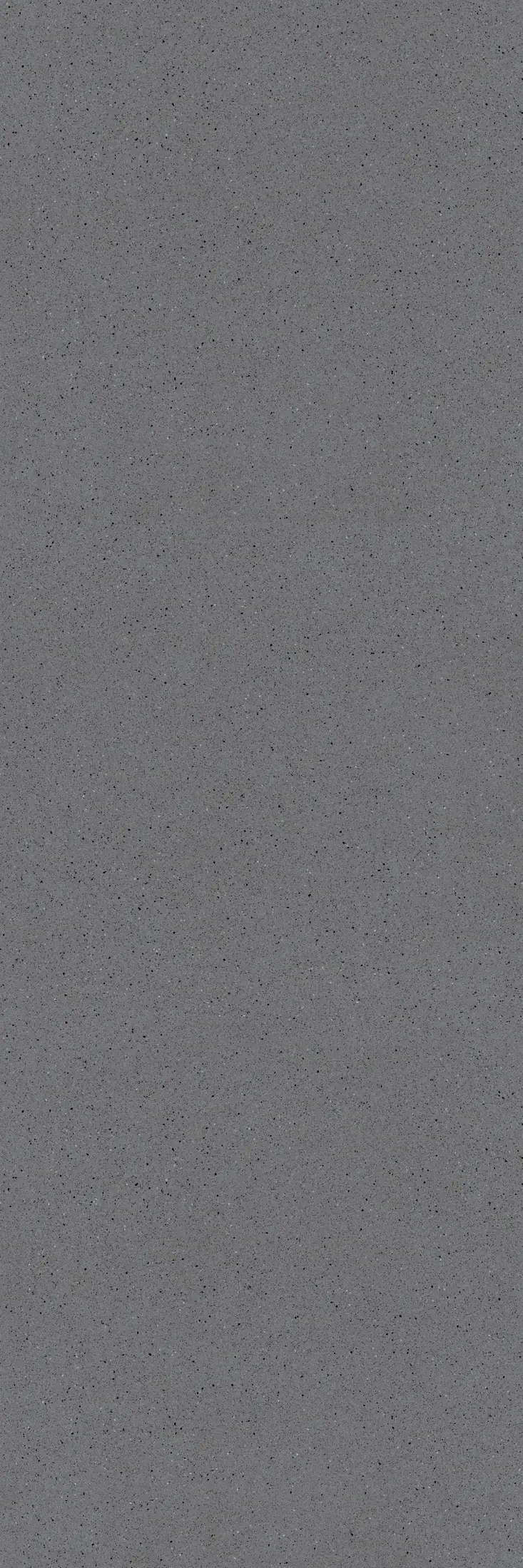
Chip a glazed porcelain tile and you will see a different colour underneath, usually a red, buff or grey body. Chip a full body tile and the colour looks the same all the way through. That one difference drives most of the trade-offs between the two.
How each tile is built
Glazed porcelain has a pressed body, a printed design and a glaze on top. The design lives in a layer less than a millimetre thick. Modern digital printing gives it extraordinary detail, so you can reproduce marble, wood, stone, terrazzo or concrete convincingly.
Full body porcelain (also called through-body or homogeneous) is made from coloured powder that runs through the whole thickness. Some versions add a light surface print or a mineral texture, but the base colour is continuous. The designs are usually plain, speckled or stone-like.
Comparison table
| Point | Full body | Glazed porcelain |
|---|---|---|
| Colour | Through the whole tile | On the surface only |
| Design range | Limited, mostly stone, concrete, speckle | Very wide, any look including wood and marble |
| Chip visibility | Low, chip matches the surface | Higher, contrasting body shows |
| Wear in heavy traffic | Excellent | Good, glaze can wear in extreme use |
| Edge treatment | Rectified edges look clean and consistent | Rectified edges may show the body colour |
| Typical use | Commercial, retail, public buildings | Homes, hospitality, feature areas |
| Look | Sober, durable | Decorative, expressive |
Why designers choose full body
In airports, supermarkets, hospitals and schools, floors take punishment. Trolleys, grit and constant footfall wear a glaze over time. A full body tile wears more evenly, because the surface is the same as the layer under it. Chips from dropped tools or furniture are far less noticeable, and the floor looks newer for longer.
Full body tiles also suit modern minimal interiors, where a plain, tonal floor is preferred.
Why designers choose glazed
When the brief calls for a specific look, glazed wins. Wood planks, marble slabs, patterned encaustic designs and bold terrazzo are all printed. A residential floor or a hotel lobby rarely sees the abrasion that wears a glaze, and the design flexibility is the main point.
Glazed tiles are also more widely available in large formats and across more surfaces.
What buyers should check
- Thickness: full body tiles are often specified at 10 mm or more for heavy use.
- Abrasion class, if the floor is commercial.
- Slip rating for wet or external use.
- Edge finish: rectified edges give tight joints with either type.
- Shade variation across the production lot.
Lumina Tile lists full body floor tiles at 8, 9 and 10 mm in 30 × 30, 60 × 60 and 60 × 120 cm, in Matt and Glossy depending on size. Compare them with porcelain floor tiles and see full body floor tiles for the dedicated collection.
Cost and lifecycle
Full body usually costs more to produce, but may cost less over the floor's lifetime in a commercial setting, because it needs fewer replacements and looks acceptable for longer. For a house, the lifetime argument weakens, and the design range matters more. The honest answer is that neither is better in absolute terms. They suit different jobs.
A hybrid approach often gives the best result. Many commercial buildings use full body tiles in entrances, corridors and service areas, and glazed designs in lounges, meeting rooms and wall cladding. The two can share a colour family so the building feels coherent while the hardest-working floors get the toughest tile.
Also consider repair. If a full body tile is damaged, the replacement looks the same as the surrounding floor even after some wear. With a glazed tile, a new tile beside an old one can show a slight difference in surface condition. Keep a few spare boxes from the same lot for any floor that will need maintenance.
Ask for the traffic rating or abrasion class in writing for any commercial floor, so that the choice is based on evidence, not on the body type alone.
Lumina Tile can advise on which of its sourced designs suit heavy-duty floors and which are better kept for lighter use, once it knows the traffic and the finish you are after.
Common questions
Is full body porcelain stronger?
Not necessarily in breaking strength, which depends on thickness and body. It is more resistant to visible wear and chipping.
Can full body tiles look like marble?
Some have a veined effect, but the range is narrower than printed glazed porcelain.
Are they suitable for outdoors?
Both can be, if the tile is rated for it and has the right slip resistance. Check the specification.
If your project is commercial or hospitality, send the use and traffic level to our team via the contact page and we will suggest the right body type.