Double charge and soluble salt tiles are often grouped together, because they sit in the same part of a price list and both give a polished, shiny floor. They are made differently, and the difference shows up in pattern, wear and how you can use them.
How a double charge tile is made
A double charge tile is pressed twice. A thin top layer of coloured, pigmented powder is pressed over a base body. The top layer is usually a few millimetres thick, which gives the tile a visible pattern that sits in the body rather than being printed on it. After firing, the surface is polished, which gives a mirror finish and exposes the pattern.
Because the pattern is pressed rather than printed, the design is typically simpler: speckles, veins, solid colours or marble-style flows with a softer definition.
How a soluble salt tile is made
A soluble salt tile is made with a coloured salt solution applied to the surface of a pressed body. The salts penetrate and colour the upper layer during firing. After polishing, the colour remains in a thin zone beneath the surface. The result is rich, tonal colour with an organic, cloud-like quality.
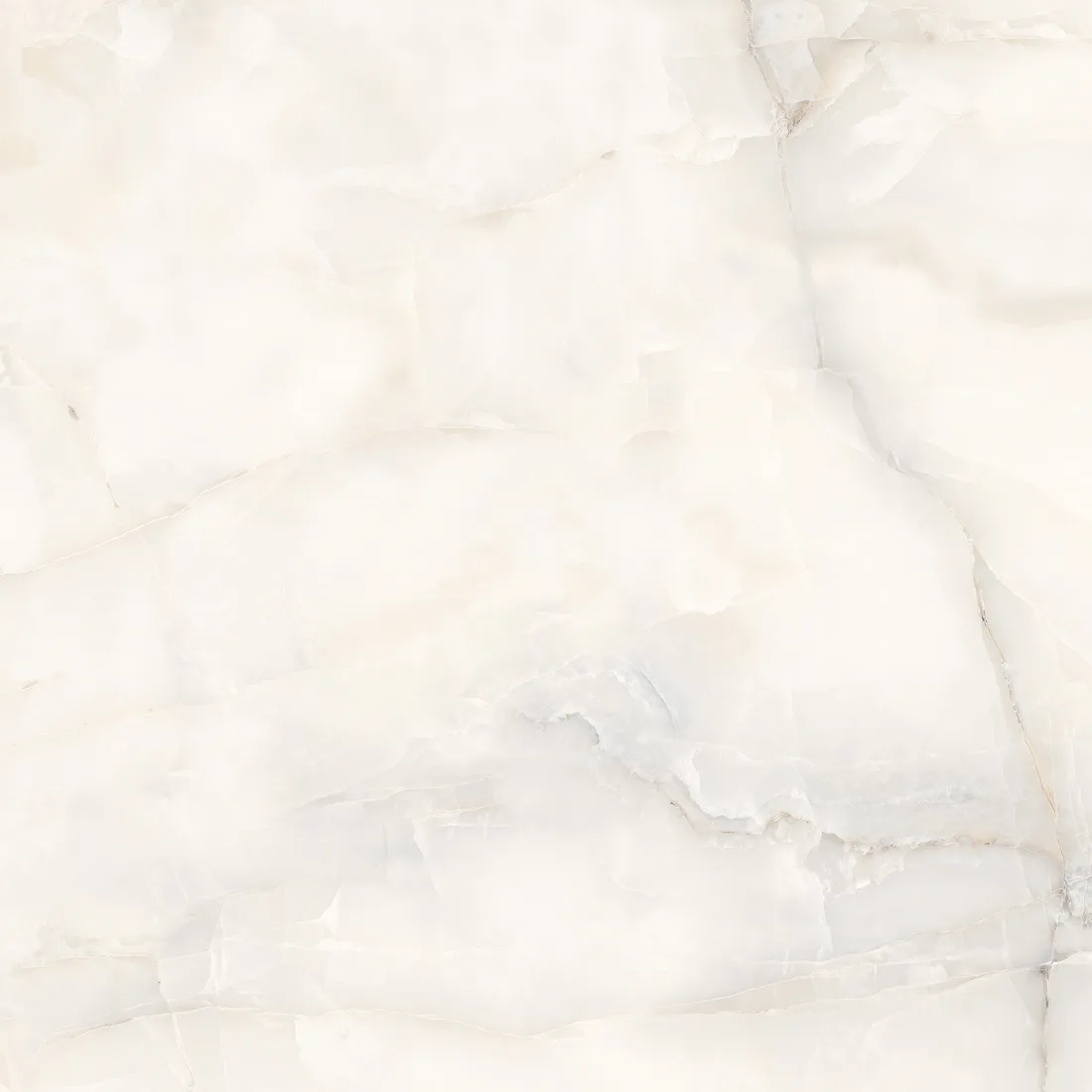
Soluble salt designs are typically sold as clean, bright tiles in shades of ivory, beige and grey, with patterns that look like natural stone.
Comparison table
| Feature | Double charge | Soluble salt |
|---|---|---|
| Construction | Two pressed layers, coloured top layer | Salt solution coloured into the surface |
| Pattern depth | Visible layer, a few millimetres | Thin colour zone near the surface |
| Design style | Speckles, plain tones, subtle veins | Cloud-like, tonal, stone-like |
| Wear resistance | Good, pattern persists as the surface wears | Good, but deep wear can reveal the base |
| Finish | Polished, high gloss | Polished, high gloss |
| Typical use | Interior floors, commercial areas, shops | Interior floors, homes, offices |
| Wet areas | Not recommended without anti-slip treatment | Not recommended without anti-slip treatment |
Where they fit in the market
Both products are value-driven. Buyers choose them for a polished look at a lower tier than printed glazed porcelain. They are common in housing projects, shops, offices and warehouses in markets where clients want a bright, reflective floor and expect good wear resistance without a printed design.
They are not the choice for exteriors, shower floors or anywhere with regular water. The glossy surface offers little grip when wet. Absorption values are generally higher than for porcelain, so confirm the figure before specifying for cold climates.
What to check before ordering
- The actual water absorption figure from the production lot.
- Thickness, because it varies from batch to batch in some factories.
- Shade consistency across boxes. Salt tiles can vary more than printed tiles.
- Whether the surface has a protective polish or nano treatment against stains.
- Calibre and edge squareness for tight joints.
Lumina Tile lists soluble salt and double charge as a distinct collection, in 60 × 60 cm (600 × 600 mm) Glossy, with a thickness of 8–9 mm. You can see the range at soluble salt and double charge, and compare it to printed options in porcelain floor tiles.
Choosing between them
If you want a plain, quiet floor with visible depth and speckle, double charge is a natural fit. If you want a soft, flowing colour that resembles stone, soluble salt is the closer match. Always check that all boxes come from the same lot, because colour in pressed and salt products depends on firing.
For a design-led project with detailed marble, wood or concrete looks, glazed porcelain is a better fit than either.
Installation is simple but a few habits help. Mix boxes from different cartons as you lay, so any slight shade difference spreads across the floor rather than showing as a patch. Use a pale, fine grout close to the tile colour, because polished surfaces make strong grout contrast look busy. Protect the finished floor with a cover during other trades, since a polished surface scratches if grit is dragged across it.
For long-term care, a neutral cleaner and a microfibre mop are enough. Avoid acid-based products, which can dull the polish and attack the grout.
Common questions
Which lasts longer?
Double charge keeps its colour through a thicker layer, so it tolerates deeper wear. Both last well in normal interior use.
Can they be used in kitchens?
Yes, with care. The gloss shows spills and oil marks, and the surface is slippery when wet.
Are they suitable for large commercial floors?
Often yes, because the colour is built into the tile and hides wear well.
To compare the two against your project needs, use the contact page and give us the area and market.