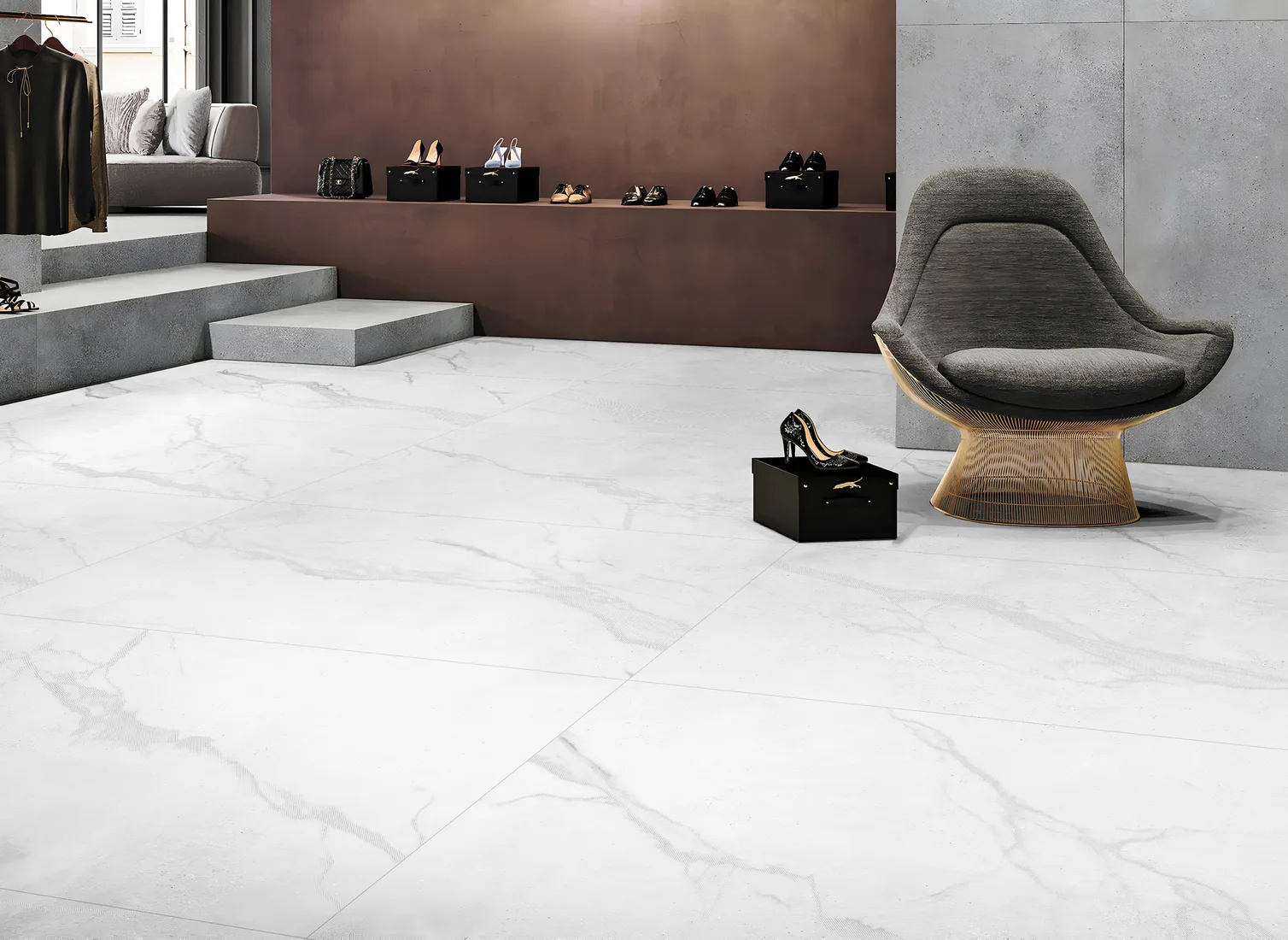
A glossy tile is smooth and reflective. A carving tile has a surface relief, a subtle pattern of raised and recessed texture pressed or etched into the glaze. They share the same body and often the same design, yet they change a room in very different ways.
How each finish is made
Glossy tiles receive a polished or high-gloss glaze that reflects light almost like a mirror. The surface is flat and sealed, which is why spills wipe away easily and why the finish shows every footprint.
Carving tiles are textured during pressing or by digital glaze application. The relief can follow the print, so a stone grain feels like stone, or it can be a general light texture that breaks up reflection. The tile reads as matt to the eye, with a tactile surface under the hand.
Comparison at a glance
| Feature | Glossy | Carving |
|---|---|---|
| Light behaviour | Strong reflection, makes rooms brighter | Diffused light, softer look |
| Texture underfoot | Smooth | Fine relief, more grip |
| Slip performance when wet | Lowest of the common finishes | Better, though not a substitute for an R rating |
| Shows dust and footprints | Very visibly | Less visibly |
| Cleaning | Quick wipe, streaks if over-diluted cleaner | Needs a brush or textured mop in recesses |
| Best for | Feature walls, living rooms, showrooms | Bathrooms, kitchens, entrances, commercial floors |
| Visual realism of stone or wood prints | Moderate | High, when the relief follows the print |
Appearance in the room
Gloss amplifies light. In a small, dim room with limited windows it can make the space feel larger and cleaner. In a large, bright room it can produce glare, especially under downlights, where each lamp becomes a visible reflection.
Carving removes that glare. It suits spaces where the design should feel calm and natural. It also handles raking light better, because texture hides minor surface variation rather than highlighting it.
Maintenance in practice
Glossy floors need frequent cleaning to look their best, because dust, grit and water marks are plain to see. Grit also scratches a glossy surface over time, which dulls it in busy walkways.
Carving tiles hide everyday marks but can hold dirt in the texture. Use a stiff nylon brush on a regular basis and a neutral cleaner. Avoid acid cleaners that can damage grout. In wet areas, a carved surface also helps with traction, though a bathroom floor should still be specified to a recognised slip rating.
Choosing by room
- Living rooms and showrooms: glossy gives a clean, reflective finish.
- Bathrooms: carving on the floor, glossy on the walls is a common and effective pairing.
- Kitchens: carving floors resist visible wear; glossy splashbacks are easy to wipe.
- Entrances and corridors: carving, for grip and for hiding traffic marks.
Lumina Tile lists Glossy and Carving among its surface options across porcelain and large slab formats, so one design can often be compared in both finishes. Browse the full set at all designs, or check which sizes carry each surface in the catalogues.
Mixing both in one project
Using both finishes in a single project is common. Put gloss on walls and in low-traffic areas, and carving where people walk and water collects. Keep the design series the same so the colour and veining remain consistent across finishes. Always compare one tile from each finish side by side, because the same print can look slightly different under gloss.
Think about the viewing angle too. Gloss looks best when seen from a distance across a wide floor, where reflections stretch the space. Carving looks best when seen up close, where the relief can be felt as well as seen. Hotels often put gloss in the main lobby and carving in corridors and bathrooms, so each finish is used where it has most effect.
Check the print under the finish. A marble design in gloss shows crisp, deep veins. The same design in carving may look slightly softer, because the relief breaks up the reflection. Compare both before you decide, and make sure every box in an order has the same finish code.
When quoting both finishes for a client, show them side by side with the same design reference and the same size, so the only variable is the surface. It makes the decision easier and avoids disputes about colour later.
Lumina Tile can quote the same design in several surfaces within one order, which keeps the colour matched across rooms.
Common questions
Is carving the same as an anti-slip tile?
No. Carving adds texture and some grip, but anti-slip performance is measured separately by ratings such as R10 or R11. Specify the rating if safety matters.
Do glossy tiles scratch easily?
A porcelain glossy tile is hard, but fine grit can dull the glaze in heavy-traffic areas. Entrance mats help a lot.
Which is cheaper to maintain?
Glossy is faster to wipe, but needs more frequent cleaning to look good. Carving needs less frequent cleaning but more effort per clean.
If you are comparing both finishes for a project, send us the sizes and designs you have in mind through our contact page and we will confirm what is available.