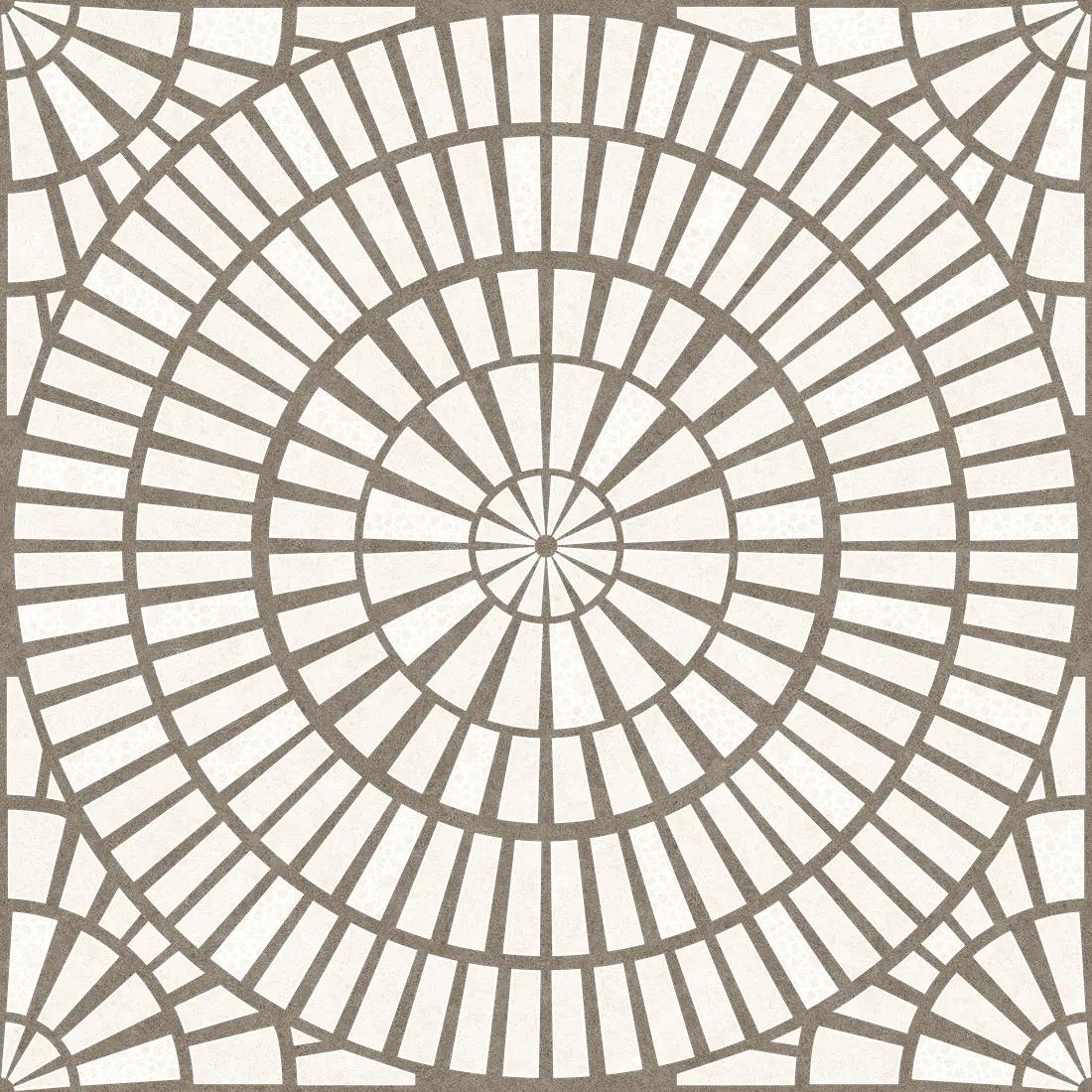
Carving is a surface finish where the tile is pressed or glazed with fine relief that follows the printed design. Run a hand across it and you feel the grain of the wood, the vein of the marble or the weave of the fabric. It sits between a smooth matt tile and a deeply textured rustic one.
How the finish is made
The relief is created during pressing or by applying glazes and digital inks in layers so the surface has small peaks and valleys. In better designs, the texture is registered to the print, meaning the grooves line up with the printed lines. That is what separates a convincing carving tile from a plain tile with random roughness.
Registration also changes how light plays on the tile. A matt tile reflects light evenly. A carved tile has tiny shadows that make the surface look deeper, which is why carving finishes are popular on wood look and stone look designs.
What you gain over a flat matt tile
- Realism: grain, vein and fibre feel real to the touch as well as to the eye.
- Grip: the surface has more micro texture than a smooth tile, which helps in damp rooms. It is not a substitute for a rated anti slip tile where a rating is required.
- Depth: light and shadow make walls and floors look richer.
- Less visible marking: light scuffs and water spots show less than on glossy tiles.
What to watch for
Relief collects dirt more readily than a flat surface. Cleaning is easy with a soft brush and neutral cleaner, but a mop alone may leave dust in the grooves of deeper textures. For kitchens that see grease, expect to scrub occasionally.
Carving can also produce subtle shade differences at an angle, so look at the tile in the actual lighting of the project. Raking light from a window shows texture strongly, while downlights flatten it.
Where it works
| Application | Suitability | Note |
|---|---|---|
| Living room floor | Very good | Warm, natural feel underfoot |
| Bathroom wall | Very good | Adds depth in low light |
| Bathroom floor | Good | Choose a rated tile where regulations require it |
| Kitchen floor | Good | Clean regularly to keep grooves clear |
| Commercial corridor | Good | Wears well, hides scuffs |
| Feature wall | Excellent | Best use of the finish |
Sizes that offer carving
Lumina Tile supplies carving across several families. In ceramic wall, it is available in 30 × 60 cm. In ceramic floor, it is available in 60 × 60 cm. In porcelain floor tiles, it is offered in 30 × 30 cm, 60 × 60 cm, 60 × 120 cm, 20 × 120 cm, 60 × 180 cm, 80 × 80 cm, 80 × 160 cm, 100 × 100 cm, 120 × 120 cm and 120 × 180 cm. In large slabs from 80 × 240 cm up to 160 × 320 cm, carving is also available, and in the subway range it is offered in 21.5 × 25 cm. The catalogue shows the exact list by size, and the porcelain floor tiles range is the best place to compare carved designs in large format.
Laying and grouting
- Use a tile adhesive suited to the tile weight and size, and back butter large formats.
- Choose a grout that matches the tone of the tile. Textured surfaces hold grout residue, so wipe it off promptly.
- Seal only if the manufacturer recommends it. Most porcelain does not need sealing.
- Avoid acid cleaners and abrasive pads.
Carving in the supply chain
For importers building a range, carving is useful because it lets one design serve two price and style positions: a matt version for budget minded customers and a carved version for those wanting a more natural look. Ask for both surfaces of the same design and display them together so buyers can feel the difference. Remember that carved tiles are packed and handled like any other, but cartons should be stored flat and dry, since moisture trapped against the textured face is slow to dry out.
Common questions
Is carving the same as structured or textured?
They overlap. Carving usually means the texture follows the printed design. Textured can include random relief that does not match the print.
Is carving slippery when wet?
It has more grip than glossy but is not rated like R-10 or R-11 tiles. Where slip resistance is specified, check the rating of the exact design, using the technical details as a starting point.
Can carving tiles be used outdoors?
For covered terraces, yes with the right product. For open exposed areas, specify a dedicated outdoor porcelain tile instead.
To see carved designs in your preferred sizes, send an enquiry through the contact page.