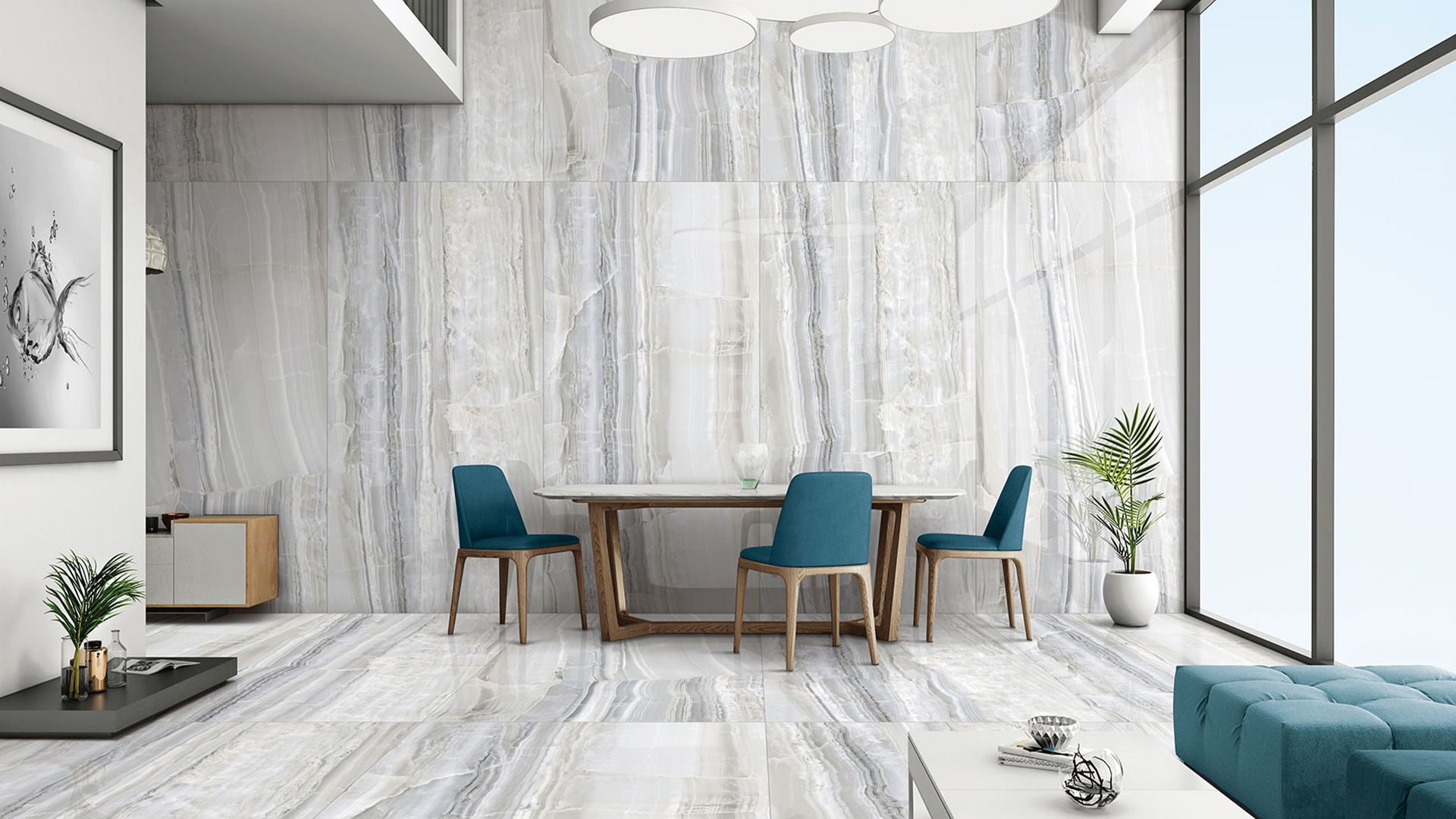
A distributor's range is a set of bets. Every size, surface and design you stock ties up money and warehouse space, and only some of them will sell. The aim is to cover what customers ask for, with enough depth to be reliable, and without a long tail of slow movers.
Begin with your customers, not the catalogue
List who you sell to: builders, retailers, contractors, interior designers or homeowners through showrooms. Each group buys differently. Builders want volume in a few dependable tiles. Designers want choice and distinctive surfaces. Retailers want coordinated ranges they can display.
Then list the jobs they do: bathrooms, kitchens, living areas, shop fronts, terraces. These jobs tell you which categories you need before you look at a single design.
Build the core in layers
- Core floor tile. A general-purpose size, such as 60 × 60 cm (600 × 600 mm), in neutral and mid-tone designs.
- Core wall tile. A versatile wall format in light and mid tones for bathrooms and kitchens.
- Premium and large format. A smaller selection of larger porcelain sizes for higher-end projects.
- Specialist lines. Outdoor, full body and decorative tiles where there is clear demand.
Start with the first two layers. They carry volume. Add the others as you learn what your market asks for.
Balance your categories
| Category | Role in the range |
|---|---|
| Ceramic wall tiles | Everyday bathrooms and kitchens |
| Ceramic floor tiles | Volume floor tiles for housing and light commercial |
| Porcelain floor tiles | Higher quality floors, large formats, premium look |
| Full body tiles | Heavy traffic and commercial spaces |
| Outdoor porcelain | Terraces, patios, pool areas |
| Subway tiles | Splashbacks, feature walls, compact bathrooms |
| Large slab tiles | Statement surfaces, façades, counters |
Lumina Tile supplies all of these categories, so a distributor can build the full range through one supplier. Browse by category, for example porcelain floor tiles or outdoor porcelain tiles, to see what each layer can hold.
Think about surfaces and looks
Cover the main looks: stone, marble, wood effect, concrete, terrazzo and plain colours. Within each, offer a polished and a matt version where customers might want a choice. Add a slip-resistant option for wet and outdoor areas, because it is a specification requirement, not a style choice.
Keep the number of looks manageable at the start. Ten well-chosen designs that complement each other sell better than thirty random ones.
Decide stock depth
Stock depth is how much of each line you hold. Fast-moving core lines need depth, so you do not run out mid-project. Slow lines need only enough for showroom display and small jobs. Reorder timing matters as much as quantity, because import lead times are long, and a stock-out can last weeks.
Plan reorders on your sales speed and the supplier's dispatch window, not on when the shelf looks empty.
Expand with evidence
Track which sizes, surfaces and designs sell, and which customers ask for something you do not stock. Use mixed container orders to add new lines in small quantities and test them. Retire the slow sellers before they pile up. The full design library is a useful place to scout the next additions.
Presenting the range to customers
A range sells better when customers can see how it fits together. Group designs by look, show wall and floor options side by side and keep display boards current. Retire boards for lines you no longer stock, because customers ask for what they see.
Train your sales team on the basics: which tiles are for outdoors, which surfaces are slip resistant and which formats need experienced installers. Accurate advice builds repeat business.
Review the range at regular intervals. Look at what sold, what lingered and what customers asked for in vain. Treat the review as a routine, and adjust the next order accordingly. Ranges that are never reviewed drift towards what was easy to buy rather than what is easy to sell.
Share your findings with your supplier too. A supplier who knows your market can suggest sizes and surfaces you may not have considered, and can flag designs that tend to sell slowly elsewhere.
Common questions
How many designs should a new distributor stock?
Fewer than you think. Start with a focused core in the sizes that sell in your area, and add as data comes in.
Should I stock the same design in several sizes?
Often yes. Coordinated sizes of one design let customers match wall to floor, which raises the size of each sale.
How do I manage shade consistency across reorders?
Ask your supplier to match repeat orders against the first shipment, and store stock by batch code.
To build a first range, talk to Lumina Tile about your market and customers and we will suggest a starting mix of sizes and categories.