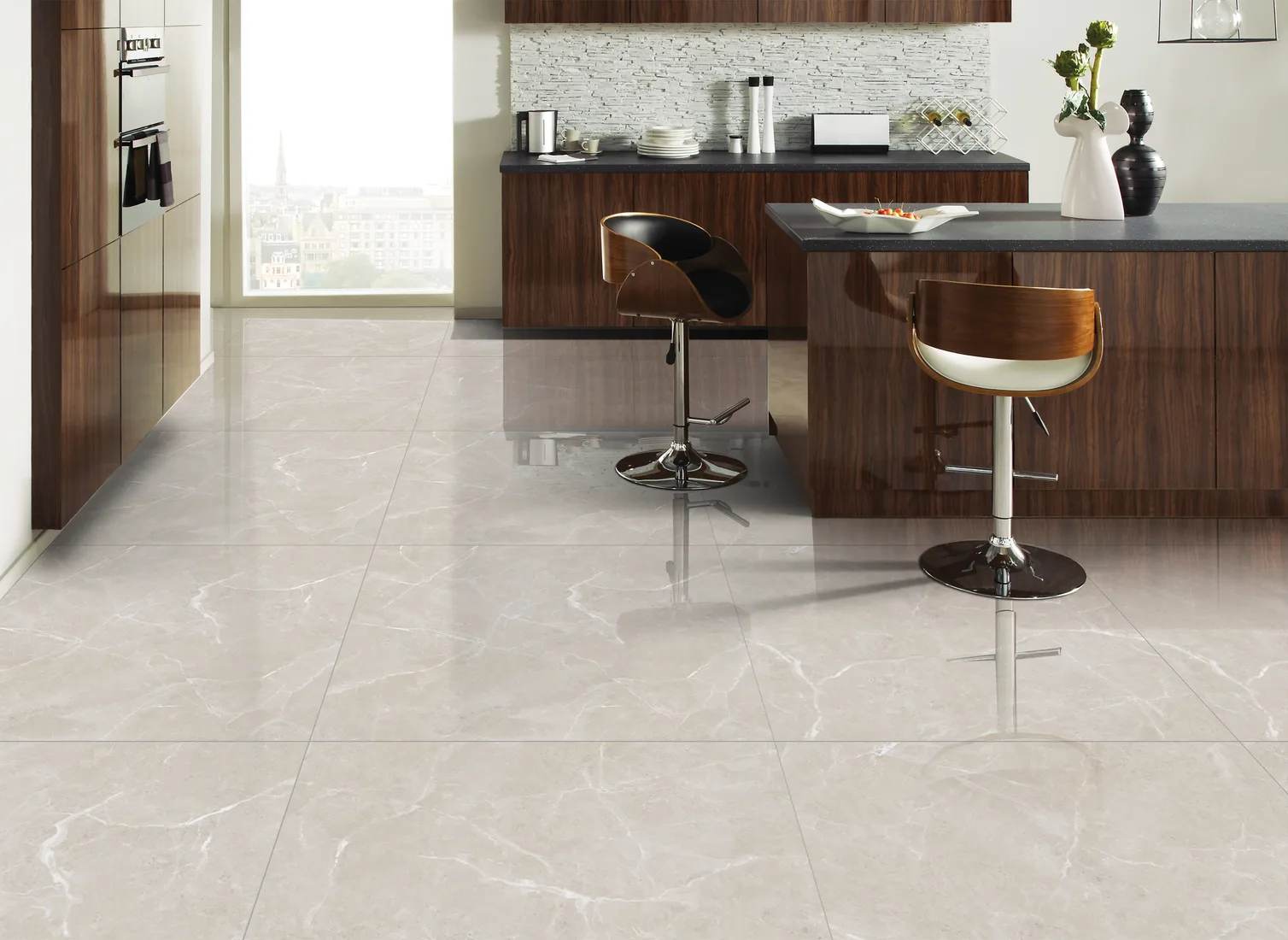
Beige and cream are the colours importers can order with the least worry. They suit houses, apartments, clinics, hotels and shops, they hide dust and they go with almost every wall colour and furniture style. The risk is blandness, and that is avoidable with a few decisions.
Beige is not one colour
What buyers call beige covers a surprisingly wide spread.
- Ivory and cream: yellow leaning, soft and bright. Good for marble look and traditional rooms.
- Sand and biscuit: mid warmth, the typical travertine tone.
- Taupe and greige: beige with grey. Modern and slightly cooler.
- Stone and limestone: a muted, cool leaning neutral that suits minimalist rooms.
- Latte and mocha beige: darker, close to light brown, good for floors.
Mixing undertones in one room is the usual cause of a muddy result. If the wall paint is warm cream, a pink beige tile can look dirty beside it. Take the wall colour, curtains and main furniture into account before choosing.
Making beige interesting
- Use surface depth. A carving or sugar surface gives beige softness and shadow.
- Choose natural patterns. Travertine, limestone and sandstone effects add organic variation.
- Add contrast with trim. A dark border, skirting or metal profile gives definition.
- Layer tones. Combine a light cream wall with a sand floor, not identical colours.
- Use texture in the room, not only in the tile: woven baskets, rattan, linen and raw wood.
Where beige and cream work best
| Space | Why it works | Suggested finish |
|---|---|---|
| Living rooms | Warm, restful base | Matt or lapato |
| Bathrooms | Clean and spa like | Glossy walls, sugar floor |
| Kitchens | Hides splashes and crumbs | Matt |
| Hospitality and healthcare | Calm and non clinical | Matt or carving |
| Outdoor seating | Reflects heat better than dark tiles | R-10 or R-11 |
Light, space and size
Pale beige reflects light and enlarges small rooms, particularly in glossy wall tiles and large floor tiles with narrow joints. Lumina Tile supplies a wide spread of sizes in beige and cream shades: ceramic wall tiles from 20 × 30 cm to 40 × 80 cm, ceramic and porcelain floor tiles from 30 × 30 cm up to 120 × 180 cm, and large slabs for seamless surfaces. Browse the ceramic floor tiles for cost conscious residential projects and the porcelain floor tiles for high traffic and larger formats.
Matching and stock planning
Beige shows shade variation. Two cartons from different production runs may not match exactly. This matters more with light colours, because the eye picks up small differences in a plain surface. When ordering, quote the whole quantity for a design together and ask for batch details. For stock programmes, plan reorders with the same design reference so the supplier can reproduce the artwork. The tiles calculator helps to avoid short ordering, which is the usual cause of mismatches.
Grout colour is the final decision. A grout slightly darker than the tile is forgiving on floors. For walls, a close match gives a calm finish.
Beige in commercial and hospitality spaces
Beige is the standard choice where the tile must fade into the background of branding, furniture and people. Hotel corridors, clinic waiting rooms, shopping arcades and restaurants all rely on it. In these settings, durability and consistency matter more than novelty. Specify porcelain for high traffic floors, keep the surface matt or lapato, and choose a design with enough variation to hide daily wear.
Wall and floor combinations
A reliable scheme is a cream glossy wall tile with a sand coloured matt floor from the same family. The two share undertones but differ in value, so the room has depth without clashing. For bathrooms, add a darker border or a single feature strip in a deeper beige or brown to keep the scheme from feeling flat. In kitchens, pair beige floors with white or pale wall tiles and a warm timber worktop.
One last tip for stock buyers: display beige designs next to their grey and white alternatives. Customers often discover that the beige they thought they wanted is actually a greige, and seeing options together shortens the decision.
Common questions
Are beige tiles outdated?
Plain, flat beige can look dated. Beige with a stone, travertine or concrete character is current and very popular.
Do cream tiles stain easily?
Porcelain with low water absorption resists staining. Light colours show tea, soil and grout stains more than mid tones, so choose a matt or textured surface for floors.
What colours go with beige tiles?
Almost everything. Sage green, terracotta, navy, charcoal, walnut and brass are all reliable partners.
If you want help selecting beige and cream designs for your range, send your enquiry through the contact page.