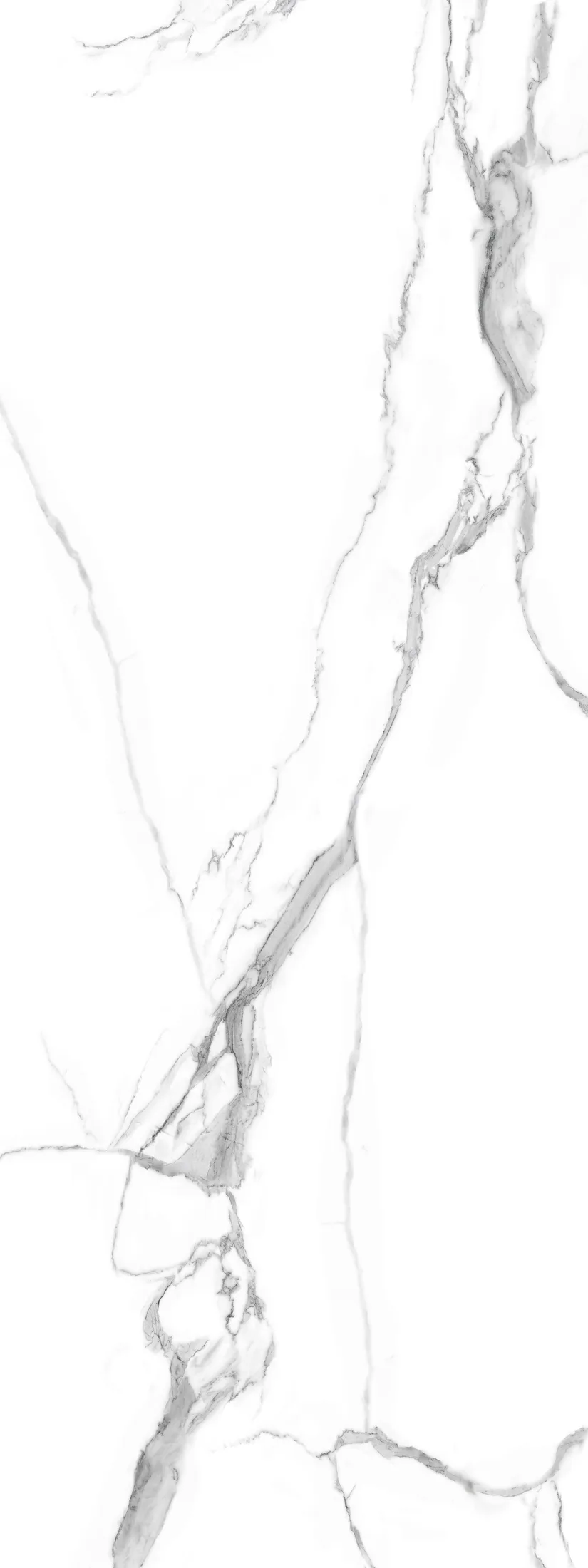
The two most common porcelain floor formats are 60 × 60 cm (600 × 600 mm) and 60 × 120 cm (600 × 1200 mm). Both are widely stocked and available in many finishes. They look and install quite differently, and the right one depends on the room as much as on taste.
Size and visual effect
A 60 × 60 cm tile is a square. It gives a balanced, neutral grid and works in nearly any room. A 60 × 120 cm tile is a rectangle with a 1:2 ratio. It gives longer lines, fewer joints and a more modern, spacious feel, particularly in open-plan spaces.
Fewer joints mean the eye sees a calmer surface. In a small room, however, a large rectangle can feel cut up because of the number of cuts at the edges.
Comparison table
| Factor | 60 × 60 cm | 60 × 120 cm |
|---|---|---|
| Look | Classic grid, neutral | Modern, linear, fewer joints |
| Best room size | Small to large | Medium to large, open plan |
| Laying patterns | Straight, diagonal, brick | Straight, brick (one third offset), herringbone with care |
| Wastage | Lower in small rooms | Higher in small or irregular rooms |
| Handling | One person | Two people recommended |
| Substrate flatness | Standard tolerance | Tighter tolerance needed |
| Breakage in transit | Lower | Higher, longer unsupported span |
| Grout area | More joints to clean | Fewer joints |
Practical points when choosing
Flatness. Long tiles amplify floor irregularity. A slight hollow that a 60 × 60 cm tile would bridge can cause lippage, or uneven edges, with a 60 × 120 cm tile. Level the substrate first.
Pattern. For 60 × 120 cm, avoid a half-offset brick pattern. Plank-like tiles can bow slightly in the middle, and aligning those bows creates visible lippage. A one-third offset is safer.
Rectification. Both formats look best with rectified edges and narrow grout joints, and rectification is nearly essential with long formats for a clean line.
Doorways and thresholds. Plan where tiles meet other floors. A big format can leave small, awkward cuts at doorways.
Surface and thickness
Lumina Tile offers both formats in the porcelain floor tiles range, in 8, 9, 10 and 12 mm thicknesses, with surfaces including Glossy, Matt, Carving, Sugar, Lapato, R-10, R-11, Rustic and Punch. Full body floor tiles are listed in both sizes as well. The catalogues list the options per size.
Freight and packing
A 60 × 60 cm tile packs more densely and with less breakage risk. A 60 × 120 cm tile uses more material per box and may be packed with fewer pieces per carton. Container loading changes accordingly. Use packaging details to compare cartons, and work out quantities with the tiles calculator, adding a larger wastage allowance for the bigger format.
A simple rule of thumb
- Small rooms, tight budgets, patterned layouts: 60 × 60 cm.
- Large living areas, open-plan homes, retail floors: 60 × 120 cm.
- Mixed projects: use both, 60 × 120 cm for main spaces, 60 × 60 cm for bathrooms and utility areas, in the same design.
Underfloor heating is compatible with both, but large tiles need a slower, staged heat-up after installation to avoid stress in the adhesive and the tile. Check with the adhesive supplier. Also check door clearances and thresholds, since a 12 mm tile on a bed of adhesive adds height that may foul a door or leave a step against the next room.
Colour variation matters more with large formats, because a single tile covers more area and any shade difference stands out. Lay out several boxes together before fixing, and blend tiles from different cartons so the floor looks even.
Lumina Tile also lists 60 × 60 and 60 × 120 cm in full body and in rectified-style porcelain, so a project can keep one design from the lobby to the service corridor and change only the body type or surface to suit the load.
Finally, always confirm the exact nominal and actual size. A tile sold as 60 × 120 cm may measure slightly less after firing, and the calibre code on each box tells you which batch you hold. Keep tiles of the same calibre together on one floor so joints stay even.
Common questions
Does a larger tile make a small room look bigger?
Slightly, because fewer joints break the surface. But too many awkward cuts can undo the effect.
Is 60 × 120 cm harder to install?
Yes. It needs a flatter base, full adhesive coverage and a careful tiler.
Is wastage really different?
In rooms with many corners, yes. In a plain rectangle, the difference is modest.
Send the floor plan or area to us through the contact page and we will help compare the two formats for your project.